 blog
blog
Acoustic Energy AE1 40th Anniversary: 2026 Review
Table of Contents
- Design and Build Quality
- Technical Specifications and Driver Technology
- Sound Performance and Sonic Signature
- AE1 40th Anniversary Amplifier Pairing
- Best Bookshelf Speakers for Vinyl: How the AE1 40th Anniversary Compares
- Acoustic Room Placement Guide
- Long-Term Reliability and Maintenance
- Conclusion
- Frequently Asked Questions
Last Updated: September 13, 2026
Design and Build Quality
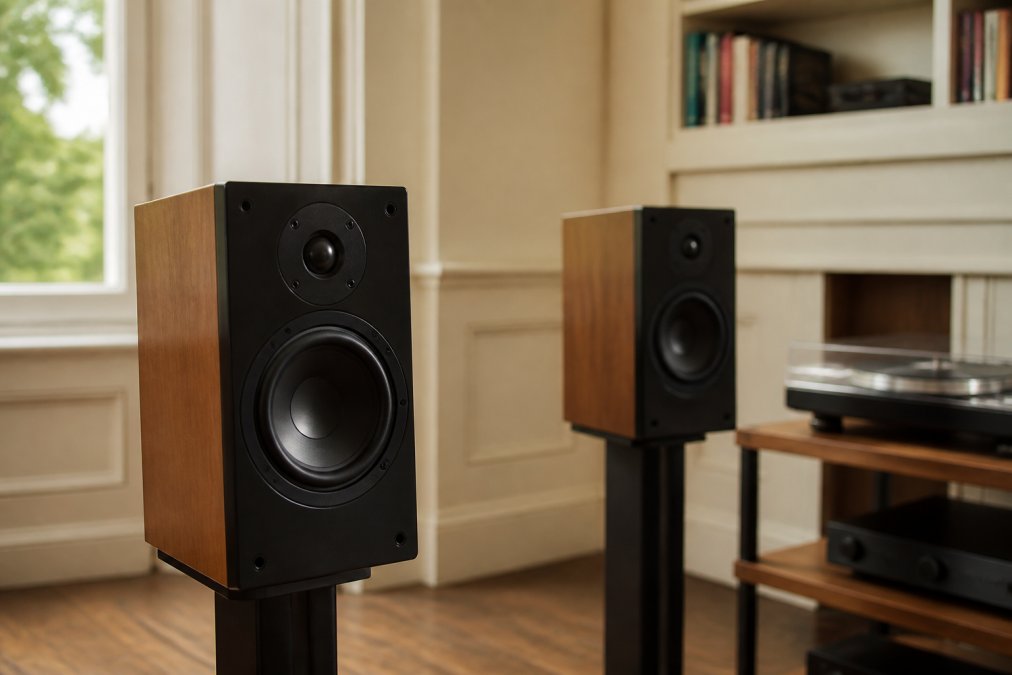
The Acoustic Energy AE1 40th Anniversary is a stand-mount loudspeaker celebrating four decades of one of British hi-fi's most respected monitor designs. Customers often ask: do they justify the outlay over a standard pair? The cabinet work alone says yes.
Cabinet Rigidity and Piano Gloss Finish
Cabinet rigidity is where the AE1 40th Anniversary earns its keep. The heavily braced enclosure is finished in a deep piano gloss that looks far more expensive than the asking price. Rigidity matters because flexing panels colour the midrange, exactly where this speaker excels. The gloss demands care: fingerprints show, and sunlight dulls it.
Retro Design Meets Modern Materials
The retro design nods to the original AE1, but the materials are thoroughly modern. Hard-anodised aluminium cones and a fabric dome tweeter replace the older driver set, so you get the classic look with current engineering. It's genuinely re-engineered, not a cosmetic tribute, which matters if you're buying to keep.
Technical Specifications and Driver Technology
Technical specifications tell you how a speaker behaves before you hear it, and the AE1 40th Anniversary keeps things simple. The rated impedance is low, sensitivity moderate, and the crossover deliberately uncomplicated (bowerswilkins.com). Those three facts shape every partnering decision you'll make.
Hard-Anodised Aluminium Cone and Fabric Dome Tweeter
The hard-anodised aluminium cone handles mid-bass, while a fabric dome tweeter covers the top end. Aluminium cones are stiff and light, aiding transient response and keeping distortion low when pushed. The fabric dome is softer and less prone to brightness than metal tweeters, so it's easier to live with over long sessions.
Low-Order Crossover and Enclosure Damping
A low-order crossover shapes the sonic signature most. Fewer components in the signal path means better detail retrieval and more coherent imaging, though it demands more of the drivers. Enclosure damping controls internal resonance so the cabinet adds no voice of its own. In practice, the speaker sounds fast and articulate rather than warm and forgiving.
Sound Performance and Sonic Signature
The AE1 40th Anniversary leans towards accuracy rather than romance. Soundstage and imaging are the standout qualities, with instruments placed precisely across a wide, deep picture. The punch is real but controlled, not the bloated one-note bass some stand-mounts produce.
Midrange and Bass Response
Midrange and bass are where the low-order crossover pays off. Vocals sit forward and clear, and the mid-bass driver delivers enough weight for most music without a subwoofer in a typical room. The very bottom octave is where it falls short: with organ music or electronic bass, you'll notice the roll-off.
High-Frequency Performance and Detail Retrieval
High-frequency performance is smooth rather than sparkling. The fabric dome avoids the fatigue bright metal tweeters cause, and detail retrieval is impressive for the price. The trade-off: poorly recorded material won't be flattered. These speakers tell you what's on the record, either the point or a problem, depending on your priorities.
AE1 40th Anniversary Amplifier Pairing
AE1 40th Anniversary amplifier pairing is the biggest factor in whether these speakers sound brilliant or disappointing. Get it right and they sing; get it wrong and you'll blame the speakers for a problem that lives in the amplifier.
Impedance and Sensitivity Considerations
The AE1 40th Anniversary presents a low impedance load with moderate sensitivity, so it needs an amplifier that delivers current into a demanding load, not one that simply quotes high wattage. Many budget amps claim plenty of power but struggle when impedance dips. A common mistake is matching on watts alone, which can lead to a thin sound.
Recommended Amplifier Characteristics
Look for a genuinely strong power supply, good current delivery, and a warm-ish tonal balance to complement the speaker's neutral character. Mid-range integrated amplifiers work well, as do modest separates. You don't need enormous wattage, control matters more than headline power.
| Amplifier Trait | Why It Matters | What to Avoid |
|---|---|---|
| High current delivery | Handles low impedance dips | Watts quoted without current figures |
| strong power supply | Keeps bass controlled | Lightweight budget units |
| Slightly warm tone | Balances neutral speakers | Bright, forward amplifiers |
| Good damping factor | Tightens mid-bass | Poorly damped valve designs |
Best Bookshelf Speakers for Vinyl: How the AE1 40th Anniversary Compares
If you're hunting for the best bookshelf speakers for vinyl, the AE1 40th Anniversary belongs on your shortlist, but it isn't automatically the right answer. Vinyl rewards dynamics, midrange clarity and low-level detail without added colouration. This design delivers all three, with a cabinet honesty most rivals in the bracket can't match.
Why Vinyl Specifically Suits This Speaker
Vinyl is a mechanical format: the cartridge generates a tiny signal, the phono stage amplifies it, and any downstream resonance or smearing is laid bare. The AE1 40th Anniversary's low-order crossover and rigid, heavily braced cabinet suit this unusually well. Fewer components means less phase shift and better transient accuracy, exactly what you want from a stylus tracing a groove.
The flip side: these speakers are unforgiving of surface noise. A worn pressing, misaligned cartridge or dirty record will be audible. That's not a fault, it's the price of transparency. If your vinyl is well cared for, the payoff is a genuinely present midrange.
Stand-Mount vs Floorstanding for Vinyl
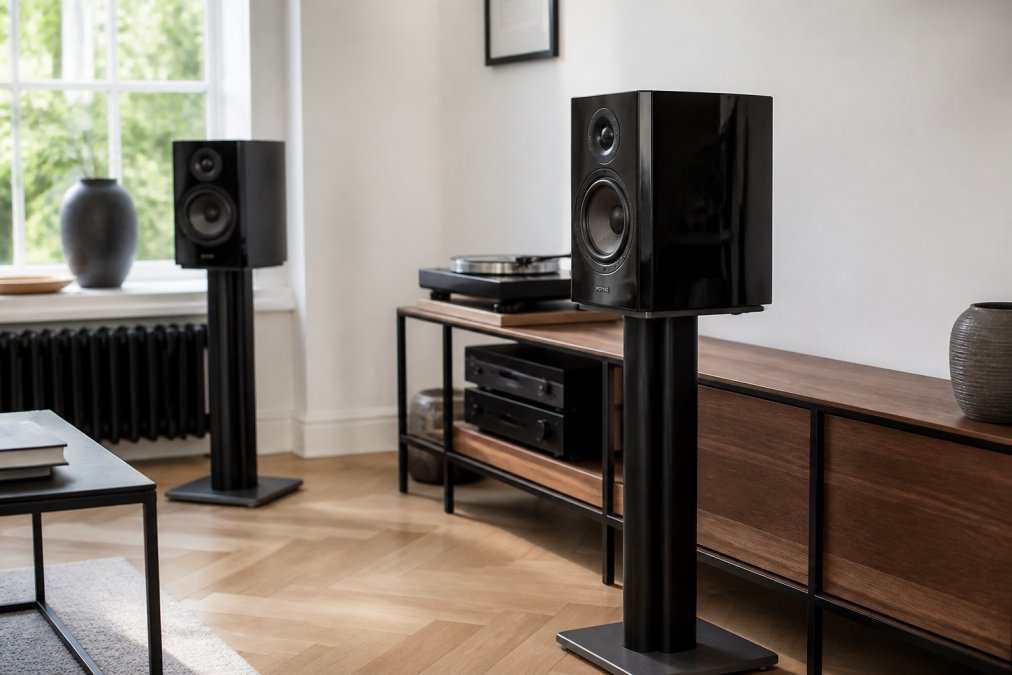
Stand-mounts generally image better and suit smaller rooms; floorstanders move more air and dig deeper. For vinyl, the stand-mount advantage in imaging and midrange coherence usually wins unless your room is large. Proper stands aren't optional: a shelf undermines everything the cabinet was designed to do. A rigid, mass-loaded stand around 600mm tall puts the tweeter at roughly ear level when seated, where the imaging locks in.
Modern Competitors in the Same Price Bracket
Modern competitors tend to offer more bass extension and friendlier impedance curves, making them easier to drive with budget amplification. What they rarely match is the AE1's midrange honesty and cabinet quality. If you already own a capable amplifier, the AE1 wins. Starting from scratch on a tight budget? A more efficient alternative may serve you better initially.
Where the AE1 pulls ahead is finish quality and driver integrity. Hard-anodised aluminium cones resist the flexing that blurs detail under dynamic swings, and the fabric dome avoids the metallic edge that makes long vinyl sessions fatiguing. Competitors chase deeper bass at the expense of midrange purity; this speaker does the opposite, usually the right trade for vinyl.
What to Listen For in a Demonstration
When comparing against rivals, bring records you know intimately. Listen for piano note decay, separation between backing vocals, and whether bass lines stay tuneful when the music gets busy. The AE1 40th Anniversary exposes differences between pressings that lesser speakers gloss over, either the reason to buy it or to look elsewhere.
Acoustic Room Placement Guide
Room placement decides more of your final sound than any cable or accessory. These speakers reward careful positioning and punish laziness more than most. The AE1 40th Anniversary is a sealed-cabinet stand-mount with a low-order crossover, so its room interaction is more predictable than a ported design, but less forgiving of poor placement.
Stand Height and Listening Axis
The tweeter should sit at roughly ear height when seated, for most listeners, a stand between 550mm and 650mm tall, depending on chair and room. The fabric dome has wide dispersion, so you have latitude, but moving off-axis vertically softens the top end noticeably. If your seating is low, angle the speakers back slightly using the stand's spikes or a small wedge.
Distance from the Rear Wall
Start with the rear of the cabinet at least 300mm from the wall behind it, and experiment up to 600mm (cambridgeaudio.com). Pulling them out increases soundstage depth and reduces mid-bass bloom, but also reduces bass reinforcement. In a typical 4m x 5m room, 400mm is a sensible start. Bass thick or slow? Move them out. Thin? Move them closer, but never under 200mm, or rear-wall reflections smear the imaging.
Side Walls and Toe-In
Keep at least 500mm between each speaker and the nearest side wall. Side-wall reflections are the main enemy of precise imaging, and this speaker's transparency reveals them. Toe-in should be modest: start pointing straight ahead, then angle in 5 to 10 degrees until the centre image locks in. Too much narrows the sweet spot; too little leaves the image vague.
Speaker Separation and Listening Distance
A good starting triangle is 2m between the speakers and 2.5m to 3m from each to your ears. If the centre image feels congested, widen the speakers; if edge instruments feel detached, narrow them. Adjustments of a few centimetres make an audible difference here, so move, listen, repeat.
Dealing with Small Listening Rooms
Small rooms create bass reinforcement, which can make these speakers sound thicker than they are. Pull them further from corners, consider light acoustic treatment behind the listening position, and accept a little bass bloom as the trade-off for a compact space. Near-field listening at lower volumes often beats trying to fill a small room: under 3m x 4m, try 1.5m between speakers and 1.5m to your ears.
What Most Guides Miss
Most placement advice treats all stand-mounts the same, but this one doesn't behave like a ported box. Being sealed, it rolls off gently rather than dropping sharply, so you can place it closer to a wall without the boom ported designs suffer, but you can't tune bass by moving a port. The room is your only bass control, making rear-wall distance more important, not less.
Long-Term Reliability and Maintenance
Long-term reliability is a genuine strength here. There are no complex electronics, no built-in amplification to fail, and no app-dependent features to become obsolete. Drivers, crossover components and cabinets in passive speakers of this type typically last decades with basic care.
Maintenance is straightforward:
- Keep the piano gloss finish dusted with a microfibre cloth, never a household spray
- Check driver fixings annually; they can loosen slightly with heavy use
- Keep the speakers out of direct sunlight to protect the finish
- Avoid pushing a low-powered amplifier into clipping, which is what actually kills tweeters
What most guides miss: passive speakers rarely fail on their own. They fail because they were driven by an amplifier that ran out of headroom. Match the amplifier properly and these will outlast most of the electronics feeding them.
Conclusion
Choosing a speaker that suits your room, amplifier and records takes more than a specification sheet. Chiltern Audio offers real-world hifi demonstrations, bespoke system building and expert guidance on hifi systems and Rega turntables, so you can hear the AE1 40th Anniversary before committing. We also provide a record cleaning service if vinyl is your priority. Get started with Chiltern Audio and build a system that works in your space.
Frequently Asked Questions
What makes the Acoustic Energy AE1 40th Anniversary special?
The AE1 40th Anniversary celebrates four decades of the original AE1. It uses a hard-anodised aluminium cone mid-bass driver and a fabric dome tweeter, housed in a rigid cabinet with a piano gloss finish. The low-order crossover and damping are re-engineered for improved transient response and detail retrieval. It remains a true stand-mount monitor that suits vinyl enthusiasts seeking high-fidelity sound.
How does the AE1 40th Anniversary compare to the original AE1?
The original AE1 launched in the 1980s and became a studio favourite. The 40th Anniversary edition keeps the retro design but updates the drivers and crossover. The result is a cleaner high-frequency performance and tighter mid-bass, with lower harmonic distortion. The cabinet is also more rigid, reducing resonance. It is a modern take on a classic, not a straight reissue.
Do I need a high-end amplifier to drive the AE1 40th Anniversary speakers?
Not necessarily high-end, but you need an amplifier that delivers stable power into the speaker’s impedance load. The AE1 40th Anniversary has moderate sensitivity, so a quality integrated amp with at least 50 watts per channel is a good starting point. Valve amps with 4-ohm taps can also work well. Pairing with a bright amp may emphasise treble, so neutral or warm amplification is often preferred.
Are the AE1 40th Anniversary speakers suitable for small listening rooms?
Yes, their stand-mount design and controlled bass make them suitable for small rooms. Place them at least 20 centimetres from the rear wall to avoid boomy mid-bass. A slight toe-in towards the listening position improves imaging. In very small spaces, close-to-wall placement may require careful adjustment. Overall, they are more room-friendly than large floorstanders.