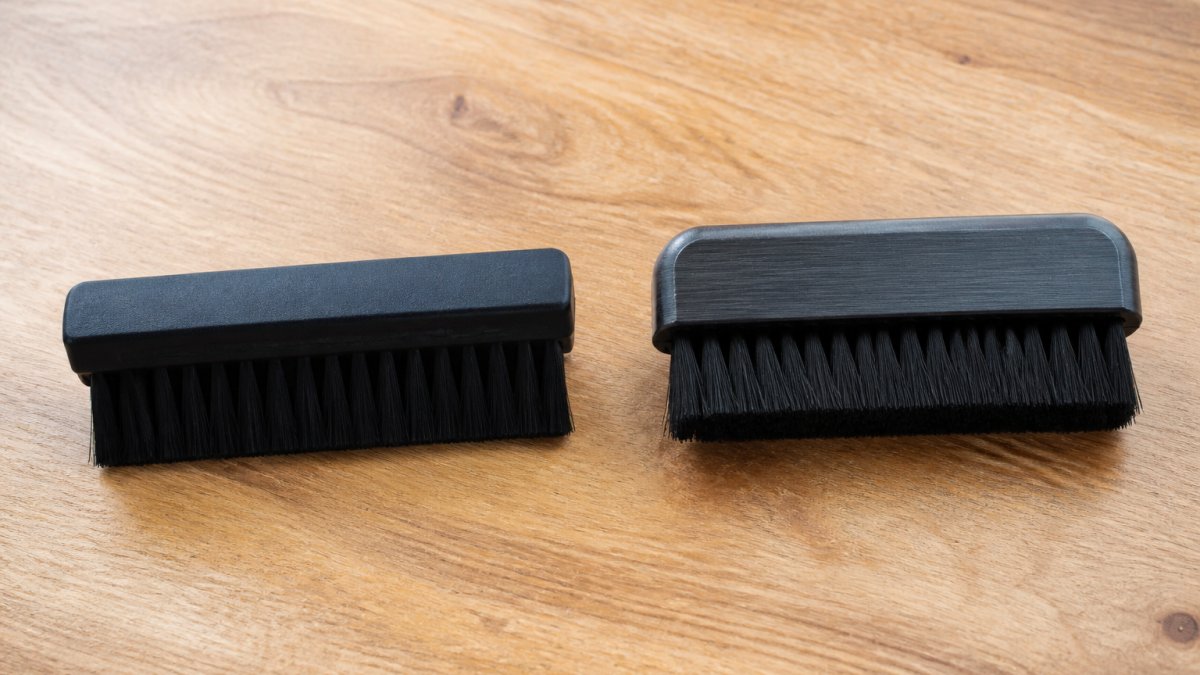
 comparison
Anti-Static Brush vs Carbon Fiber Brush for Vinyl
Table of Contents
- Anti-Static Brush vs Carbon Fiber Brush: What's the Difference?
- Quick Comparison: Anti-Static vs Carbon Fiber Brushes
- How to Clean Vinyl Records Properly With Each Brush Type
- How to Remove Static From Vinyl Records Before Playback
- Is a Record Weight Worth It for Sound Quality?
- Common Mistakes That Damage Records or Reduce Brush Performance
- Brush Longevity, Bristle Degradation and Vinyl Type Compatibility
- Frequently Asked Questions
Last Updated: September 29, 2026
Anti-Static Brush vs Carbon Fiber Brush: What's the Difference?
The short answer: a turntable anti-static brush versus a carbon fiber brush is often a false choice, because the best carbon fiber brushes are anti-static. A carbon fiber brush is a dry record brush built from fine conductive fibres that lift dust and bleed away static charge before your stylus touches the groove.
The distinction that matters: some anti-static brushes use conductive bristles to neutralise static charge, while velvet-pad designs rely on cleaning fluid. Carbon fiber brushes sit in the first camp, dry, fast, and built for the daily dust on every record.
So when people ask which to buy: for quick pre-play cleaning, a carbon fiber brush is the tool. If your records are genuinely dirty, you need a wet method as well.
How Each Brush Handles Static Charge
Static builds on vinyl through friction: the stylus dragging through the groove, the record sliding out of its sleeve, even your hand brushing the surface. That charge pulls micro-dust out of the air and pins it into the grooves, which is why a record can look clean and still crackle.
Quick Comparison: Anti-Static vs Carbon Fiber Brushes
Here's how the main options compare on the things that actually affect your records. Pricing depends on quantity, dates, and delivery. Please check the manufacturer's website for current prices.
| Brush | Type | Method | Best For | Price |
|---|---|---|---|---|
| AudioQuest Anti-Static Record Brush | Carbon fibre, conductive | Dry | Daily pre-play cleaning | £25.00 |
| Pro-Ject Brush It | Carbon fibre | Dry | Beginners wanting a simple, light brush | £15.00 |
| Audio-Technica AT6012 Record Care Kit | Velvet pad + fluid | Wet | Deep cleaning grimy records | £22.00 |
| AcousTech Big Brush | Hybrid natural/synthetic | Dry | Fast full-side cleaning | £30.00 |
How to Clean Vinyl Records Properly With Each Brush Type
Cleaning vinyl records properly comes down to matching the tool to the job. Dry brushing is the daily routine; wet cleaning is the periodic deep clean for records with real grime. Get the order right and you'll hear the difference immediately.
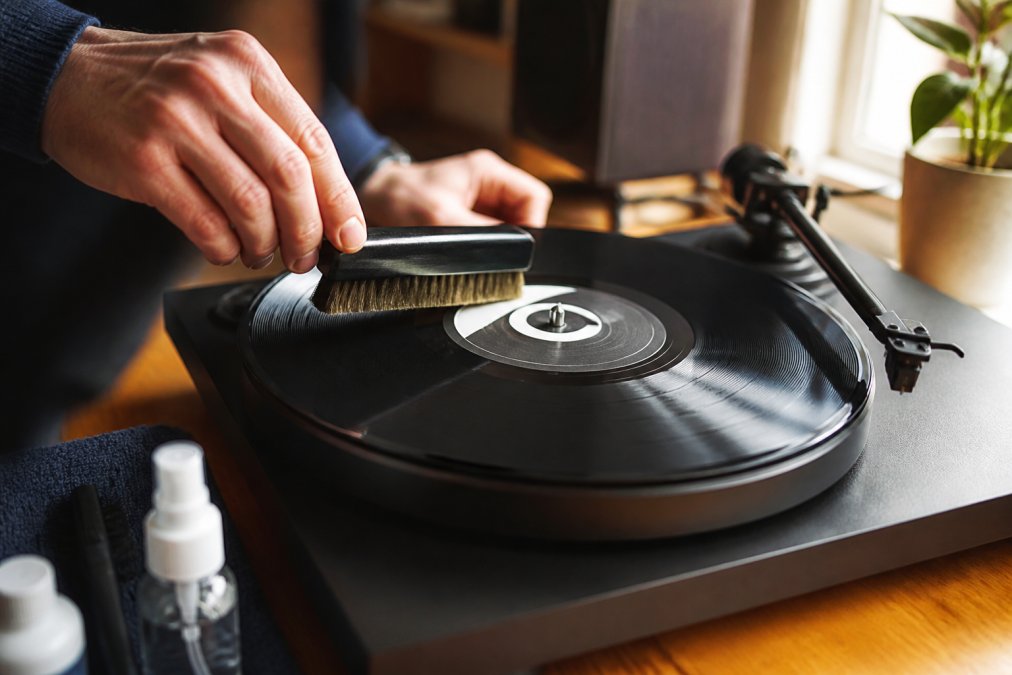
Dry Cleaning Technique for Carbon Fiber Brushes
Technique matters more than the brush. Most people press too hard and move too fast, which just pushes dust around.
- Place the record on the platter and start it spinning.
- Hold the brush so the bristles rest lightly on the surface, angled slightly against the direction of rotation.
- Let the record turn two or three full rotations with almost no downward pressure.
- Sweep the brush off the edge of the record in one smooth motion, taking the dust with it.
- Never press down. The bristles should touch the groove, not scrub it.
Wet Cleaning and Anti-Static Brush Steps
Wet cleaning needs more care and time, but it's the only way to shift fingerprints, mould release residue and years of accumulated grit.
- Apply a small amount of cleaning fluid to the pad or directly to the record.
- Work the pad along the grooves in a circular motion, following the direction of the groove, not across it.
- Let the fluid lift the debris rather than scrubbing hard.
- Wipe away residue with a clean, dry section of the pad.
- Leave the record to air dry fully before playing it.
How to Remove Static From Vinyl Records Before Playback
A few practical habits cut static dramatically:
- Store records in anti-static inner sleeves rather than the original paper ones. Paper sleeves are one of the biggest generators of triboelectric charge in a collection.
- Brush the record after removing it from the sleeve, not before. The sleeve itself deposits the dust you're trying to remove.
- Keep the room's relative humidity above roughly 40%. Below that, static builds faster than any brush can bleed it away. A cheap hygrometer beside the deck tells you whether you're fighting a losing battle.
- Avoid synthetic clothing, wool rugs and dry carpet near the turntable. Walking across a nylon carpet and then touching a record can put more charge on it than a full side of playback.
- Keep a carbon fiber brush beside the deck so you actually use it. A brush in a drawer is a brush that never removes anything.
A carbon fiber brush reduces static, it doesn't eliminate it permanently. Charge rebuilds as soon as the stylus drags through the groove. The goal is a low enough charge that dust isn't actively attracted during the side, not zero.
Is a Record Weight Worth It for Sound Quality?
A record weight is worth it for some systems and a waste of money for others. It clamps the record flat against the platter, reducing resonance and tightening bass on thinner or slightly warped pressings. On a well-built turntable with a flat record, the difference is subtle at best.
Where a weight earns its place:
- Warped or thin pressings that don't sit flat
- Lightweight platters that ring
- Systems where you've already sorted the basics
Where it doesn't:
- Heavier platters that already damp vibration well
- Records that sit perfectly flat
- Any setup where you haven't fixed static and dust yet
Common Mistakes That Damage Records or Reduce Brush Performance
The biggest mistake is pressing hard. Carbon fibre bristles are fine and flexible by design; leaning on them bends the fibres, reduces their reach into the groove, and shortens the brush's life. Light contact is the whole technique.
Other common mistakes:
- Brushing in the wrong direction, pushing debris deeper into the groove instead of lifting it
- Lifting the brush straight off the record, dropping collected dust back on
- Using a wet record immediately after cleaning
- Storing the brush bristles-down on a dusty shelf
- Using the same brush on visibly dirty records without ever deep cleaning them
Brush Longevity, Bristle Degradation and Vinyl Type Compatibility
A carbon fiber brush should last years, not months, if you treat it well, but almost no guide explains what actually kills one. Bristle degradation is real, slow, and almost entirely user-caused rather than record-caused.
Signs it's time for a new brush:
-
Bristles that stay bent after use rather than springing back
-
Visible fibre shedding onto the record
-
A brush that no longer lifts dust effectively, even after cleaning
-
A noticeable change in how the brush feels against the record, a worn brush tends to skate rather than glide
-
180g audiophile pressings tend to sit flatter and have deeper, cleaner grooves. They respond well to a light dry brush and rarely need more.
-
Vintage and thin pressings are more likely to be slightly warped or to have accumulated decades of grime in the groove. A dry brush will lift surface dust but won't shift hardened residue, that needs a wet clean first, then dry brushing as maintenance.
-
Already-scratched or worn records are the one real caution. No brush will fix groove damage, and aggressive brushing on a worn record just adds surface noise. Use light pressure and accept that the brush is removing dust, not restoring the groove.
Frequently Asked Questions
Do anti-static record brushes actually work?
They reduce static charge, but results depend on the brush and how you use it. Carbon fiber brushes with conductive handles dissipate static as you sweep, while velvet or hybrid anti-static brushes rely on fibre contact to lift dust and neutralise charge. Neither eliminates static permanently, especially in dry rooms. Pairing a brush with proper grounding and a record weight gives more consistent results than brushing alone.
Can a carbon fiber brush scratch vinyl records?
A carbon fiber brush with soft, fine bristles will not scratch vinyl when used correctly. The risk comes from pressing too hard, using a dirty brush, or dragging trapped grit across the groove. Always lower the brush onto a spinning record with light contact, clean the bristles regularly, and never use a brush that has picked up debris from a filthy record.
What is the difference between a velvet brush and a carbon fiber brush?
A velvet brush lifts dust and micro-dust from the groove surface and often pairs with cleaning fluid for deep cleaning. A carbon fiber brush focuses on dry cleaning and static discharge, using conductive bristles to carry charge away from the record. Many collectors keep both: carbon fiber for a quick pre-play sweep, velvet or wet methods for periodic deep cleaning.
How often should you use a carbon fiber brush on your records?
Use a carbon fiber brush before every play to remove surface dust and reduce static charge. A few slow rotations with light pressure is enough. For deeper cleaning, follow a wet or velvet brush routine every ten to twenty plays, or sooner if you notice surface noise or visible debris in the grooves.
Does a record weight help with static and sound quality?
A record weight improves contact between the vinyl and the platter, which can reduce resonance and steady playback. It does not remove static on its own, but combined with a carbon fiber brush and proper grounding, it helps maintain a cleaner, more stable listening experience. Whether it is worth it depends on your turntable and how much you notice vibration or warping.