 comparison
Expensive HiFi Speakers for Vinyl: Worth It?
Table of Contents
- The Relationship Between Speaker Quality and Vinyl Sound
- Understanding the Signal Chain: Turntable, Preamp, Amp, and Speakers
- Active vs Passive Speakers for Vinyl: Which Delivers Better Fidelity
- Best Bookshelf Speakers for Small Rooms 2026
- How to Choose HiFi Speakers for Vinyl: A Practical Framework
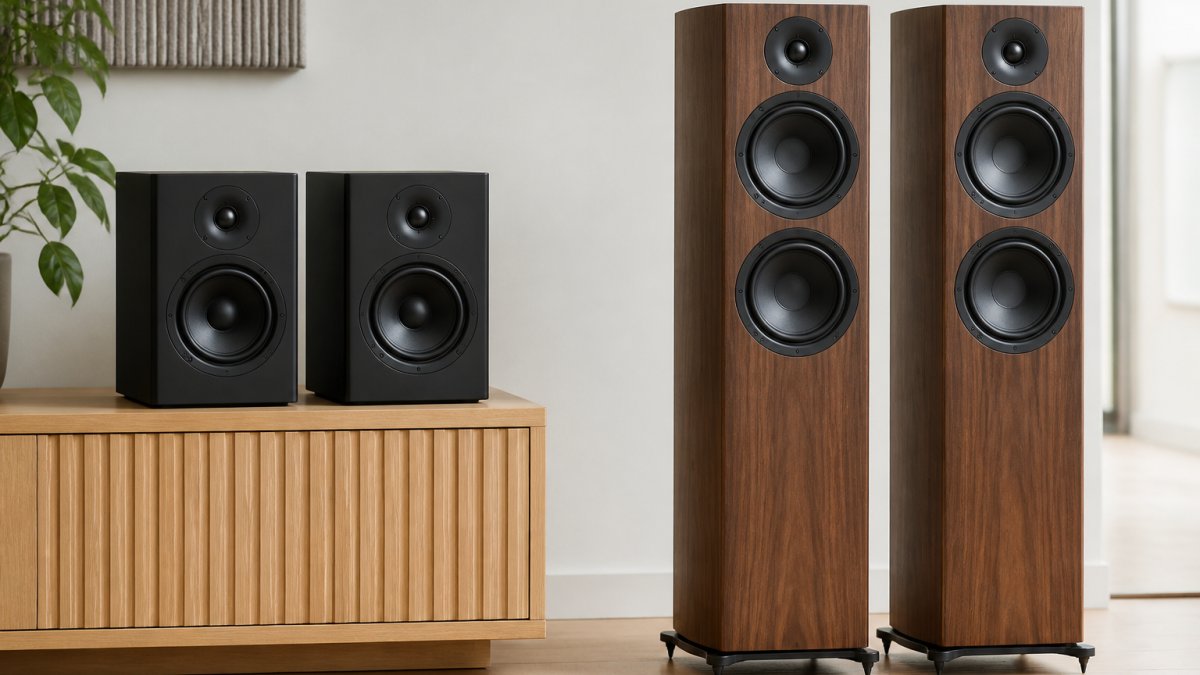
- Floorstanding vs Bookshelf Speakers for Vinyl Listening
- When Expensive Speakers Deliver Real Value
- Frequently Asked Questions
Last Updated: September 26, 2026
The Relationship Between Speaker Quality and Vinyl Sound
The short answer: yes, expensive hifi speakers vinyl deliver noticeably better sound from vinyl records. But "better" doesn't mean they're necessary for everyone.
Vinyl playback depends entirely on your signal chain. A turntable, preamp, amplifier, and speakers work together. Weak speakers will bottleneck even an excellent turntable. That said, diminishing returns kick in fast. A £1,000 pair of speakers sounds dramatically better than a £300 pair. A £4,500 pair sounds incrementally better than a £1,000 pair.
The real question isn't whether expensive HiFi speakers are worth it for vinyl, it's whether they're worth it for your room and listening habits. A £3,000 speaker in a treated listening space with proper placement will transform your vinyl collection. The same speaker in an untreated room with poor placement will disappoint you.
At Chiltern Audio, we offer expert guidance on matching speakers to rooms and budgets. What we've learned is this: the relationship between speaker quality and vinyl sound is direct, but context matters more than price alone. Your room acoustics, component matching, and speaker placement often make a bigger difference than the price tag.
Understanding the Signal Chain: Turntable, Preamp, Amp, and Speakers
Your turntable produces a tiny signal, around 5 millivolts. That signal passes through a phono preamp, which amplifies it to line level. Then it goes to your amplifier, which powers your speakers. Speakers convert that electrical signal into sound waves.
Each step matters equally. A weak link anywhere degrades the entire chain.
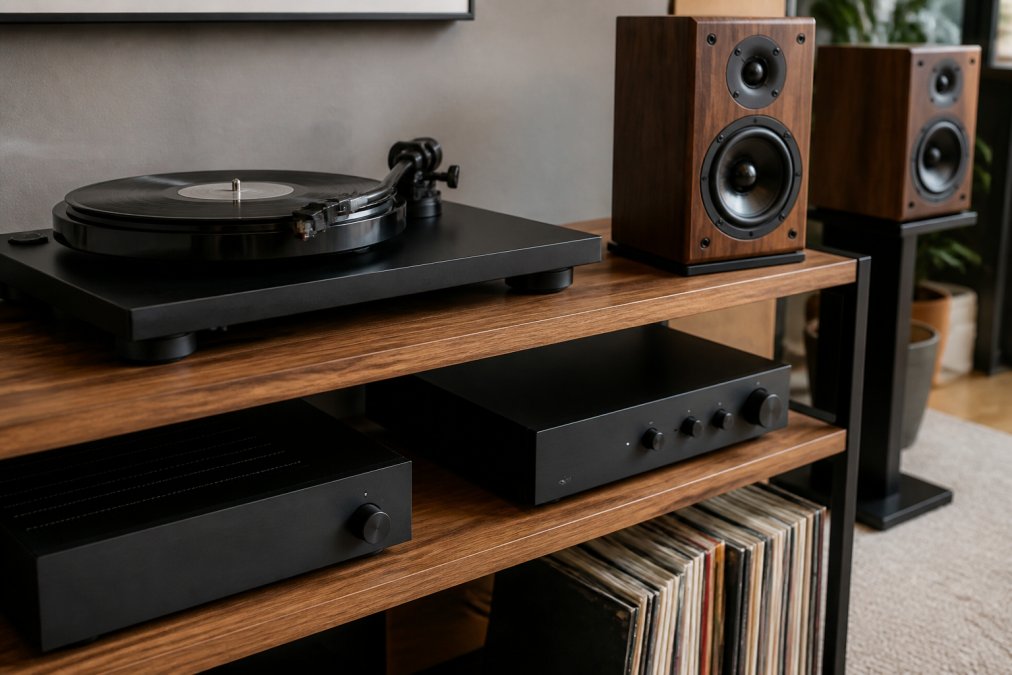
Most people assume speakers are the most important component. They're not. Your turntable and cartridge set the ceiling for sound quality. Expensive speakers won't extract detail that your turntable didn't capture in the first place. This is why audiophiles obsess over cartridge quality and tonearm geometry, they determine what information reaches your preamp.
But here's where expensive speakers earn their cost: they reveal what your turntable actually captured. A budget speaker masks detail. An expensive speaker exposes it. If your turntable is high-quality, expensive speakers let you hear why you paid for it.
The preamp amplifies the cartridge signal without adding noise. A cheap preamp adds hum and distortion. A good preamp stays transparent. The amplifier then delivers power to your speakers with minimal harmonic distortion. Finally, the speakers convert that amplified signal into accurate sound.
Matching these components matters more than buying the most expensive option at each step. A £2,000 turntable paired with a £500 amplifier and £300 speakers will sound worse than a £1,000 turntable paired with a £800 amplifier and £1,200 speakers. The second system is balanced. The first wastes money on the turntable.
Active vs Passive Speakers for Vinyl: Which Delivers Better Fidelity
Active speakers have built-in amplifiers. Passive speakers require an external amplifier. For vinyl, this choice fundamentally changes your setup.
Active speakers simplify everything. You connect your turntable's preamp output directly to the speakers. No separate amplifier to buy or integrate. Models like the PSB Alpha iQ offer built-in phono inputs, so you can connect a turntable directly without any additional components. This all-in-one approach appeals to beginners and space-conscious listeners.
The drawback: you're locked into that amplifier's sonic character. If you later want to upgrade your amplifier, you can't, it's permanently wired inside the speaker. With passive speakers, you can swap amplifiers while keeping the same speakers.
Passive speakers force you to buy an amplifier separately, but they offer flexibility. You choose the amplifier that matches your speakers and your budget. A quality external amplifier often delivers cleaner, more powerful amplification than built-in amps squeezed into speaker cabinets.
For expensive HiFi speakers worth serious investment, passive designs dominate. The Triangle Borea BR08 and Amphion Argon7LX are passive speakers. They demand a good amplifier, but that separation of concerns lets each component excel at its job. The speaker focuses on converting electrical signals to sound waves. The amplifier focuses on delivering clean power.
Active speakers make sense if you want simplicity and don't plan to upgrade. Passive speakers make sense if you want flexibility and are willing to buy an amplifier. For vinyl specifically, passive speakers paired with a quality amplifier tend to reveal more detail and transparency, the qualities that make vinyl special.
Best Bookshelf Speakers for Small Rooms 2026
Small rooms pose a challenge: bass builds up in corners, creating boomy, inaccurate sound. Bookshelf speakers solve this by producing less bass than floorstanding models, which means less room interaction.
The KEF LSX II excels in compact spaces. Its Uni-Q driver array produces exceptionally consistent sound across the listening area, so you're not locked into one "sweet spot." The drawback: you'll need an external phono stage to connect a turntable.
The PSB Alpha iQ includes a phono input, making it a true all-in-one for vinyl. The integrated 180W amplification handles most turntables without fuss. Its compact footprint works in tight spaces, and the sound is detailed without being harsh, important in small rooms where reflections can create listening fatigue.
For budget-conscious listeners, bookshelf speakers exist, but they'll limit what your turntable can reveal. You'll hear music, but not the detail and clarity that make expensive turntables worth buying. If you've invested in a quality turntable, bookshelf speakers in a suitable price range can offer genuine value.
| Speaker | Price | Best For | Key Feature |
|---|---|---|---|
| KEF LSX II | £1,049 | Small rooms, modern aesthetics | Exceptional imaging, requires external phono stage |
| PSB Alpha iQ | £1,299 | All-in-one vinyl systems | Built-in phono input, 180W amplification |
| Triangle Borea BR08 | £999 | Larger small rooms, passive setups | Efficient design, requires external amplifier |
Bookshelf speakers work best when placed on stands at ear level, not on shelves. This positions the tweeters at ear height, improving soundstage and clarity. Many listeners make the mistake of placing bookshelves on actual bookshelves, a compromise that costs you sound quality.
How to Choose HiFi Speakers for Vinyl: A Practical Framework
Choosing expensive hifi speakers vinyl requires answering three questions honestly.
First: What's your room size? Floorstanding speakers need space to breathe. In rooms under 4m × 5m, bookshelf speakers usually perform better. Larger rooms benefit from floorstanding designs that can pressurize the space more effectively.
Second: How much amplifier power do you have? Some speakers demand high power; others sound great with modest amplifiers. The Triangle Borea BR08 is efficient, it plays loud with moderate power. The Amphion Argon7LX needs more power to sound its best. Check speaker sensitivity (measured in decibels at 1 watt). Higher sensitivity means louder sound from less amplifier power.
Third: What's your listening priority? Some listeners chase detail and transparency. Others prioritize warmth and musicality. Some want neutrality. Expensive speakers excel at transparency, they reveal what your vinyl actually contains.
Budget Allocation and Diminishing Returns
Most listeners spend too much on speakers and too little on turntables and preamps. The conventional wisdom says allocate your budget equally across the signal chain. Reality is different.
Room Acoustics and Speaker Placement
Expensive speakers placed poorly sound worse than budget speakers placed well. Your room is part of your audio system.
Floorstanding vs Bookshelf Speakers for Vinyl Listening
Floorstanding speakers produce deeper bass and pressurize larger rooms more effectively. They're designed for dedicated listening spaces where size isn't a constraint. The Triangle Borea BR08 and Amphion Argon7LX are floorstanding designs that excel with vinyl.
When Expensive Speakers Deliver Real Value
Expensive HiFi speakers are worth it when three conditions align: your turntable justifies them, your room supports them, and your listening habits exploit them.
Frequently Asked Questions
Are expensive HiFi speakers actually worth buying for vinyl records?
Expensive speakers deliver measurable improvements in frequency response, soundstage, and dynamic range that reveal more detail in vinyl recordings. However, value depends on your budget allocation across the entire signal chain. A high-end speaker paired with a budget turntable wastes money; the same speaker with a quality turntable and preamp justifies the cost. Most listeners hear genuine improvements when upgrading from entry-level to mid-range speakers, but gains diminish significantly beyond that unless your room and source quality match the speaker capability.
Should I choose active or passive speakers for vinyl?
Active speakers (with built-in amplification) suit vinyl enthusiasts who want simplicity and all-in-one performance without buying a separate amplifier. Models like the PSB Alpha iQ include phono inputs and eliminate compatibility concerns. Passive speakers demand a separate amplifier but offer greater flexibility to upgrade components independently and often deliver superior transparency at higher price points. For vinyl specifically, active speakers work well for small rooms and modern streaming integration, while passive speakers suit listeners planning long-term system evolution and those with dedicated listening spaces.
What's the relationship between turntable quality and speaker quality?
Your turntable and speakers must be matched in capability. A high-end turntable (£1,500+) paired with budget speakers (£300) wastes the turntable's detail retrieval; conversely, expensive speakers cannot compensate for a poor turntable's noise floor and wow/flutter. The signal chain approach suggests allocating budget proportionally: if you invest heavily in your turntable, cartridge, and preamp, your speakers should reflect that quality tier. Many experienced listeners allocate roughly 30-40% of their system budget to speakers, with the remainder split between turntable, preamp, and amplifier.
How does room acoustics affect whether expensive speakers are worth the investment?
Room acoustics determine whether an expensive speaker can perform at its potential. A £4,500 speaker in an untreated, highly reflective room may sound worse than a £1,000 speaker in an acoustically treated space. Factors like wall distance, floor type, and furniture placement affect frequency response, soundstage, and clarity more than many people realise. Before upgrading to expensive speakers, assess your room's acoustic characteristics. Strategic speaker placement, adding absorption panels, and isolating speakers from vibration can unlock performance that otherwise requires spending more on the speakers themselves.