 blog
Better Than Peter Tyson or Audio Affair? A Speaker Matching Guide
Last Updated: October 29, 2026
Quick Summary
Good speaker matching advice starts with questions about your room, listening habits and existing kit, not product lists. Judge any dealer, including Peter Tyson and Audio Affair, by whether it explains why a pairing works and lets you audition it in a real setting. Speaker matching should always be tested by hearing the combination.
- Speaker matching is pairing speakers with an amplifier so the combination is balanced, can drive the speakers properly and suits the room.
- Ask how a dealer would pair a specific speaker with the amplifier you already own.
- Expert advice, service and value for money should be judged separately when comparing dealers.
- Room size, surfaces and placement can change the sound more than changing speaker model.
- Ask whether a home trial, loan scheme or demonstration room is available before committing.
Table of Contents
- What Good Speaker Matching Advice Actually Looks Like
- How Peter Tyson and Audio Affair Approach Speaker Matching
- Comparing Dealers on Expert Advice, Service and Value
- Speaker and Amplifier Matching: How a Dealer Should Approach It
- Speaker Recommendations for Room Size and Room Acoustics
- Questions to Ask a Hi-Fi Dealer Before You Buy
- Booking a Speaker Audition at Chiltern Audio
- Frequently Asked Questions
Choosing a hi-fi dealer for speaker matching is harder than it looks. Speakers and amplifiers have to work together in your room, and the advice you get can make or break the result. At Chiltern Audio, we think the right question is not which shop has the biggest name, but which one takes the time to understand your listening room, your music and your budget before recommending anything. This guide looks at what good speaker-matching advice actually involves, how Peter Tyson and Audio Affair approach it, and what to ask any dealer before you spend money. For the technical basics, see our detailed matching guide.
What Good Speaker Matching Advice Actually Looks Like
Good speaker matching starts with questions, not products. A dealer who recommends a model before asking about your room size, listening habits or existing kit is guessing. Speaker matching is the process of pairing speakers with an amplifier so that the combination is balanced in tone, can drive the speakers properly at your listening level, and suits the room they sit in.
Watch for three signs of genuinely useful advice. The first is a clear explanation of why a pairing works, not just a list of compatible names. The second is honesty about trade-offs, such as a speaker that needs more power than a modest amplifier can give. The third is a willingness to let you hear the options in a real setting. A common mistake is buying on spec sheets alone, since impedance and sensitivity figures only tell part of the story.
How Peter Tyson and Audio Affair Approach Speaker Matching
Peter Tyson and Audio Affair are both UK hi-fi retailers, and both are worth considering. The advice you receive from any dealer will depend heavily on the individual adviser you speak to.
We would encourage you to test each dealer directly. Ask how they would pair a specific speaker with an amplifier you already own, and see whether the answer explains the reasoning. Ask whether you can audition the combination at home or in a demonstration room. The quality of those answers tells you more than any review or marketing page.
Comparing Dealers on Expert Advice, Service and Value
Expert advice, customer service and value for money are different things, and it helps to judge them separately. A dealer may offer strong technical guidance while being slower to respond to follow-up questions, so it helps to judge them separately. The table below sets out criteria you can use when assessing any dealer for speaker matching.
| Factor | What to look for | Why it matters for speaker matching |
|---|---|---|
| Expert advice | Explains why a pairing works, asks about your room, amplifier and music | Reveals whether advice is tailored or generic |
| Audition options | Demonstration room, home trial or loan scheme | Lets you hear the match in a real setting |
| Staff expertise | Named specialists, relevant experience, detailed product guidance | Shows depth beyond star ratings |
| Customer service | Clear after-sales support, responsive contact | Matters when a pairing needs adjustment |
| Delivery and returns | Stated timescales, straightforward refund terms | Reduces risk if the match disappoints |
| Value for money | Fair pricing, honest advice to avoid unnecessary upgrades | Prevents overspending on the wrong match |
When comparing any dealers, apply the same questions to each: ask how they would pair a specific speaker with your amplifier, whether they can demonstrate the combination, and what happens if it does not suit your room. The quality of those answers is a more useful guide to technical matching skill than headline reviews.
Pricing depends on the products you choose and the services included, so compare quotes for the same system rather than individual items. Check each dealer's website for current prices and delivery terms before deciding.
Speaker and Amplifier Matching: How a Dealer Should Approach It
The best starting point is your listening habits. Someone who mainly listens to quiet acoustic music will need different characteristics from someone who plays loud rock or electronic music. A good dealer will ask what you listen to, how loud you play it and whether you use a turntable or streamer.
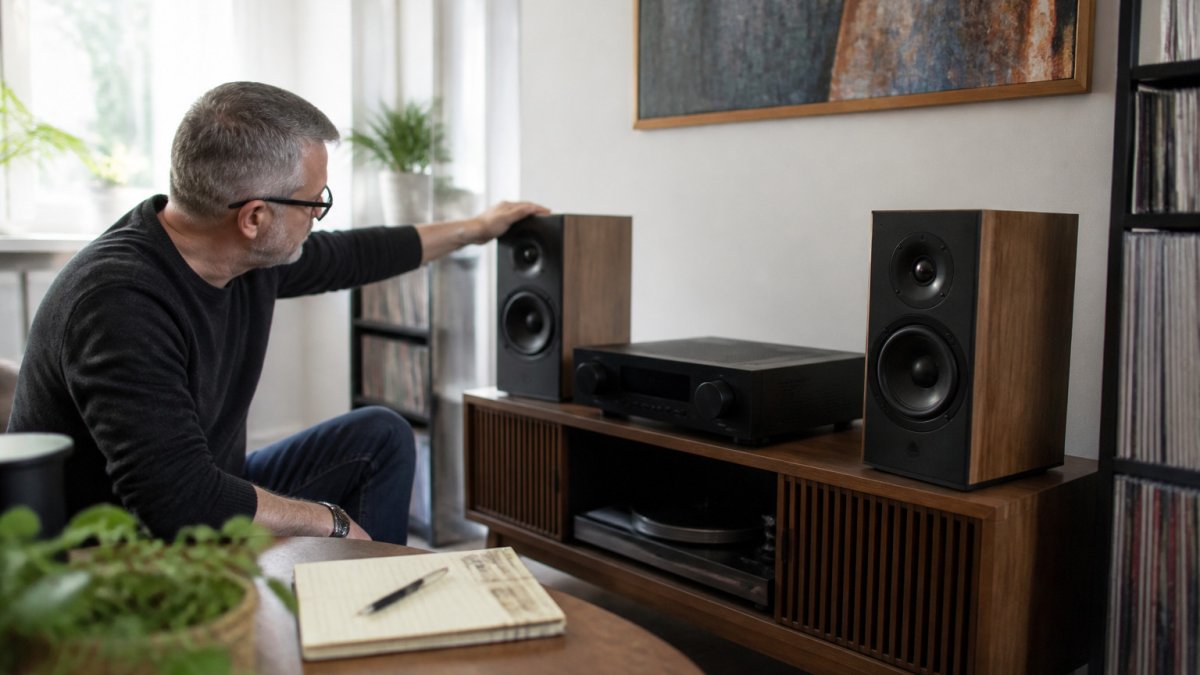
Next comes power. Amplifiers are rated in watts, but the more useful measure is whether the amplifier can drive the speaker cleanly at the volume you enjoy. For practical steps, see pairing an amplifier with passive speakers. A speaker with low sensitivity needs more power, while a highly sensitive speaker can work well with a modest amplifier. The right answer depends on the speaker's specification and your room. Our team at Chiltern Audio checks both before recommending a pairing.
Speaker Recommendations for Room Size and Room Acoustics
Room size and shape affect bass, imaging and how loud a speaker feels. A small room tends to reinforce bass, so compact speakers often sound more controlled there. Our focused list of bookshelf speakers for small rooms covers suitable options. Larger rooms usually need bigger speakers to fill the space. Hard surfaces such as glass and bare floors reflect sound, while rugs, curtains and soft furnishings absorb it. Room acoustics can change the sound considerably, which is why a demonstration in your own space is valuable.
The mechanism is worth understanding. Bass builds up where room dimensions reinforce certain frequencies, which is why a speaker that sounds balanced in a demonstration room can sound boomy in a small spare bedroom. Mid and high frequencies reflect from hard surfaces, which can make imaging feel vague or bright. Placement matters as much as the speaker itself: pulling speakers away from the front wall reduces bass reinforcement, and a slight toe-in towards the listening position often sharpens imaging. Seating position matters too, since sitting against a rear wall reinforces bass behind you. These physical interactions within the listening space ultimately shape the final output in a way that parallels the nuanced debate surrounding analog versus digital sound.
A useful consultation should ask about room dimensions, listening distance, the amplifier's power and the volume you enjoy. From those answers, a dealer can suggest a shortlist rather than a single model. For example, a low-sensitivity standmount may suit a small room driven by a modest integrated amplifier, while a larger floorstander may need more power and more space to breathe. The right answer depends on the speaker's specification and your room, and no spec sheet replaces hearing the combination.
Home auditioning is the most reliable test. Ask whether the dealer offers a home trial, a loan scheme or a demonstration that can be arranged in a room similar to yours. If a home trial is not possible, ask how the demonstration room compares with your space and whether the dealer can adjust placement during the audition. Treat any recommendation as a shortlist to audition, not a final answer.
Questions to Ask a Hi-Fi Dealer Before You Buy
Before committing to a purchase, put these questions to any dealer:
- What do you need to know about my room and listening habits before recommending speakers?
- How will you check that the amplifier can drive the speakers I choose?
- Can I audition this system at home or in a demonstration room?
- What happens if the combination does not sound right once it is set up?
- What does after-sales support cover, and how quickly do you respond?
- Can you explain the reasons for this recommendation in plain English?
A dealer who answers these clearly and without pressure is usually a good sign. One who avoids the questions or pushes you towards the most expensive option is a warning.
Booking a Speaker Audition at Chiltern Audio
Hearing speakers in your own room, or in a controlled demonstration, is the most reliable way to judge a match. At Chiltern Audio, we offer real-world hi-fi demonstrations and bespoke system building, so you can hear how speakers, amplifiers and turntables perform together before you buy. We also offer expert guidance on Rega turntables and a record cleaning service.
If you are weighing up dealers, we would suggest visiting several, asking the questions above, and comparing how each one explains its recommendations. When you are ready to hear a system, contact the Chiltern Audio team to discuss your room and your music.
Frequently Asked Questions
Which hi-fi dealers offer expert advice on matching speakers and amplifiers?
Several UK hi-fi dealers offer system-matching advice. The useful test is not the brand list but whether the dealer asks about your room, your music and your existing amplifier before recommending anything. Ask whether they will suggest a pairing you can audition with your own music. Pricing depends on the products chosen, so contact each dealer directly for current prices and advice availability.
How do I know if speakers will work well with my amplifier?
Speaker and amplifier matching depends mainly on the speaker's sensitivity and impedance and on how much power the amplifier delivers into that load. A good dealer will check these figures against your amplifier and tell you if the combination is likely to sound thin, strained or lacking control. Bring your amplifier's specifications, or the model name, to your appointment so the advice can be specific.
Can a hi-fi dealer help me choose speakers for my room?
Yes. Room size, shape, furniture and the position of the speakers all change how they sound, so a dealer should ask about these before recommending a model. Smaller rooms usually suit compact bookshelf speakers, while larger rooms may need floorstanding designs. Room acoustics matter too, so hearing speakers in your own space, where possible, is the most reliable way to confirm the choice.
What should I tell a dealer before asking for speaker recommendations?
Tell the dealer your budget, the size and layout of your room, the music you listen to most, the amplifier and source components you already own, and whether you want to add to an existing system or start again. These details let a dealer narrow the options quickly. Mentioning whether you listen loudly or quietly also helps, as it affects how much power and efficiency a speaker needs.
Speaker matching rewards patience. Take the time to hear options properly, ask why each recommendation works, and choose the dealer who explains that reasoning clearly.