 how-to
Why a Phono Preamp Is Necessary for Turntables
Table of Contents
- What Is a Phono Preamp and Why Turntables Need One
- The Low-Level Signal Problem: Why Turntables Produce Weak Output
- Signal Amplification: How a Phono Preamp Boosts Audio to Line Level
- RIAA Equalization: The Essential Frequency Correction for Vinyl Playback
- Turntable with Built-In Preamp vs External Phono Preamp
- MM vs MC Phono Preamp: Which Cartridge Type Matters
- How to Connect a Turntable to an Amplifier and Phono Input vs Line Input
- Common Troubleshooting: What Happens Without a Phono Preamp
- Frequently Asked Questions
Last Updated: October 11, 2026
What Is a Phono Preamp and Why Turntables Need One
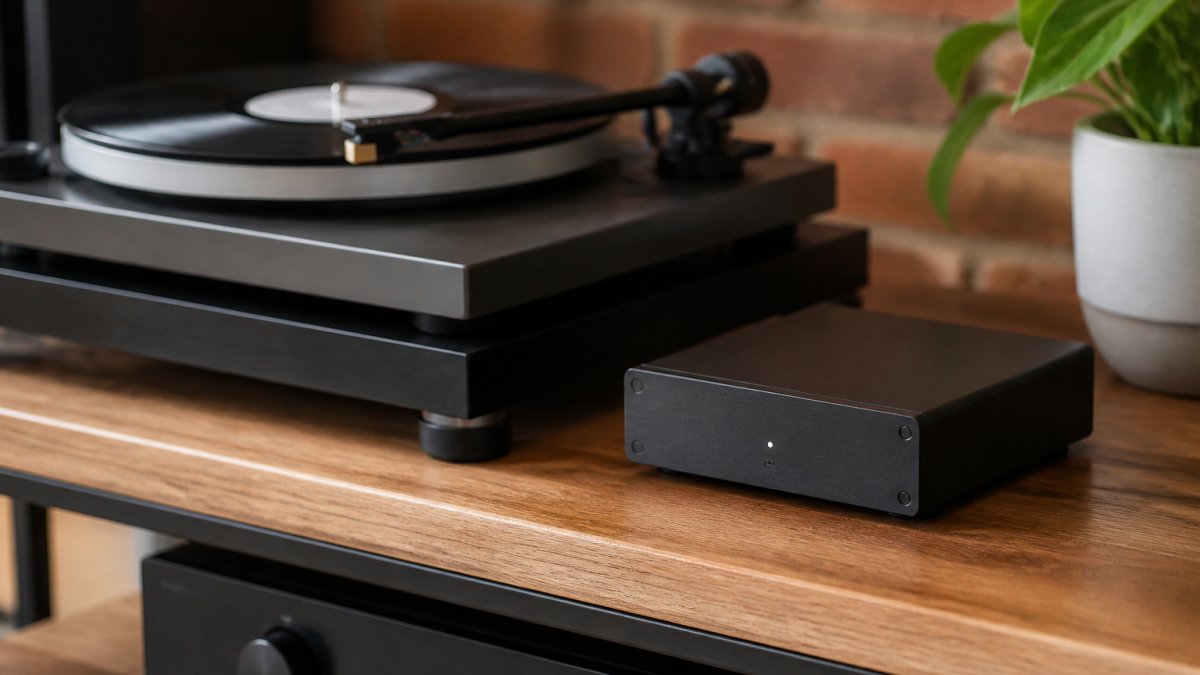
A phono preamp (also called a phono stage) is an electronic device that amplifies the weak signal produced by a turntable's cartridge and applies a specific frequency correction called RIAA equalization. Without one, your turntable's output is too quiet to hear properly through speakers or headphones, which is why a phono preamp necessary for any vinyl setup. A phono preamp is not optional, it's the bridge between your vinyl and your audio system.
A phono preamp boosts the cartridge's faint signal to usable volume and applies RIAA equalization to restore the correct frequency balance, delivering clear sound.
Most turntables either have a built-in phono preamp or require an external one. Knowing which you have, and understanding why the preamp matters, is the first step to setting up vinyl playback correctly.
The Low-Level Signal Problem: Why Turntables Produce Weak Output
Turntables produce an exceptionally weak signal, typically 2-5 millivolts, roughly 100 times quieter than a CD player. The cartridge vibrates as it tracks the groove, converting these vibrations into electrical signals.
Connecting a turntable directly to a line input without a phono preamp results in barely perceptible sound. You'd turn the volume knob all the way up and still hear only a whisper. This is why a phono preamp necessary to solve the fundamental problem of signal weakness at the source.
Signal Amplification: How a Phono Preamp Boosts Audio to Line Level
A phono preamp amplifies the turntable's weak signal to line level, which is the standard voltage used by amplifiers, receivers, and powered speakers. Line level is typically around 1 volt, roughly 200 times stronger than the cartridge's original output.
Without proper gain, your amplifier operates at maximum volume, introducing noise and distortion. A phono preamp does the heavy lifting upfront, allowing optimal amplifier operation and cleaner sound.
RIAA Equalization: The Essential Frequency Correction for Vinyl Playback
RIAA equalization is a standardized frequency correction applied during vinyl mastering. The curve boosts high frequencies and cuts low frequencies to reduce groove wear and surface noise.
The phono preamp reverses this curve during playback, restoring the original balance. Without it, vinyl sounds thin and harsh with weak bass and exaggerated treble.
Every phono preamp applies RIAA equalization as a core function. This is why a phono preamp is necessary for turntables: it's the only component that restores the correct tonal balance vinyl records demand.
Turntable with Built-In Preamp vs External Phono Preamp
Many turntables include a built-in phono preamp for simple setup. Built-in preamps prioritize cost and space over sound quality; external preamps offer better sound, adjustable settings, and independent upgrades.
Here's the practical trade-off:
| Setup Type | Best For | Advantage | Limitation |
|---|---|---|---|
| Built-in preamp | Beginners, simple systems | Fewer cables, less cost | Limited sound quality, no adjustments |
| External preamp | Serious listeners, upgrades | Better sound, more control | Extra cost, more cables |
Check your turntable's manual for a preamp on/off switch. If you find one, you can experiment with an external preamp later without any permanent changes.
MM vs MC Phono Preamp: Which Cartridge Type Matters
Phono preamps are designed for specific cartridge types: moving-magnet (MM) or moving-coil (MC). Mismatching a cartridge to a preamp causes audible problems often mistaken for equipment failure.
Output Voltage and Gain Requirements
Moving-magnet cartridges produce 4-5 millivolts and expect 47 kilohms impedance; most preamps apply ~40 dB gain. Moving-coil cartridges produce 0.5-2 millivolts at 10-100 ohms and require 60-65 dB gain.
The Impedance and Loading Problem
MM cartridges expect ~47 kilohms load; too-low impedance creates thin, bright sound. MC cartridges expect 10-100 ohms; connecting to an MM preamp causes treble peaks and harsh sound, while MM to MC causes weak output.
Many quality phono preamps include adjustable loading for MC cartridges, usually selectable via a switch or internal jumper. Check your preamp's manual for loading options before connecting an MC cartridge.
Gain Mismatch: Too Quiet or Too Loud
MM preamps with MC cartridges produce quiet output requiring higher amplifier volume. MC preamps with MM cartridges produce excessive output and clipping distortion.
Identifying Your Cartridge and Checking Compatibility
Check your turntable manual or cartridge label for MM or MC designation (4-5 mV = MM; 0.5-2 mV = MC). Match your preamp to your cartridge type and verify gain/loading settings. Thin, bright sound or weak output usually indicates impedance or gain mismatch, fixable by adjusting preamp settings.
How to Connect a Turntable to an Amplifier and Phono Input vs Line Input
Correct turntable connection depends on three things: whether your turntable has a built-in preamp, whether your amplifier has a phono input, and whether you plan to use an external preamp.
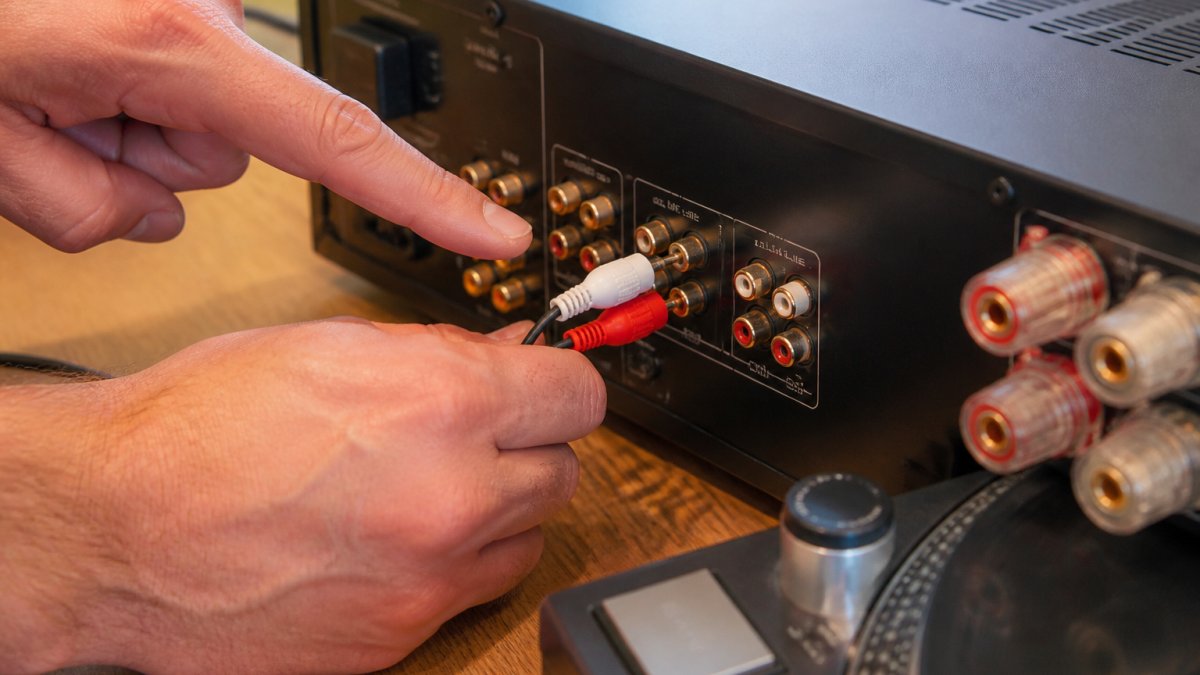
Step 1: Identify Your Turntable's Preamp Status
Check your turntable's manual or back panel for a switch labelled "Preamp On/Off", "Phono/Line", or "Output Select". If present, your turntable has a built-in preamp.
Step 2: Identify Your Amplifier's Inputs
Look at the back panel of your amplifier or AV receiver. Locate the input connectors. You're looking for two things:
A dedicated phono input is usually labelled "Phono" or "Turntable" and applies both gain and RIAA equalization internally to accept weak cartridge signals.
Line inputs. These are labelled "Aux", "Line", "CD", "Streaming", or similar. Line inputs expect a strong signal (around 1 volt) and do not apply RIAA equalization. They are not suitable for a turntable cartridge signal.
If your amplifier has no phono input, you will need an external phono preamp. This is not a limitation; many audiophiles prefer external preamps because they offer more control and better sound quality.
Step 3: Choose Your Connection Path
Use this decision tree to select the correct connection:
If your turntable has a built-in preamp AND your amplifier has a phono input:
Enable the preamp and connect the turntable's RCA outputs to the amplifier's phono input.
If your turntable has a built-in preamp AND your amplifier has NO phono input:
Enable the preamp on your turntable. Connect the turntable's RCA outputs to any line input on the amplifier (Aux, CD, Streaming, etc.).
If your turntable has NO built-in preamp AND your amplifier has a phono input:
Connect the turntable's RCA outputs directly to the amplifier's phono input.
If your turntable has NO built-in preamp AND your amplifier has NO phono input:
You must use an external phono preamp. Connect the turntable's RCA outputs to the preamp's inputs.
If you want to use an external preamp regardless of your turntable's built-in preamp:
Disable the turntable's built-in preamp (if it has an on/off switch). Connect the turntable to the external preamp's inputs.
Understanding Phono Input vs Line Input: Why It Matters
A phono input applies two critical functions: gain amplification (typically 40-60 decibels) and RIAA equalization. It expects a weak signal from a turntable cartridge (2-5 millivolts).
A line input applies no gain and no equalization. It expects a strong signal (around 1 volt) from a CD player, streaming device, preamp, or turntable with a built-in preamp.
Connecting a turntable cartridge directly to a line input bypasses both gain and equalization. The result is barely audible sound and incorrect tonal balance. Never do this unless your turntable has a built-in preamp enabled.
Grounding and Hum Prevention
Turntables can introduce a low-frequency hum (50 Hz, the mains frequency) if grounding is incorrect. This hum is caused by electromagnetic interference between the turntable's motor and the audio signal path.
Most turntables include a thin ground wire, separate from the audio RCA cables. This wire is usually bare copper or tinned and terminates in a spade connector or small ring terminal.
Connect the ground wire to the ground terminal on your phono preamp or amplifier. The ground terminal is usually labelled "GND" and is located near the phono input connectors.
If you're using an external phono preamp, connect the turntable's ground wire to the preamp's ground terminal, not the amplifier's.
If you hear a 50 Hz hum after connecting everything, check the following:
-
Is the ground wire connected? Verify that the ground wire is firmly attached to the ground terminal. A loose connection is the most common cause of hum.
-
Is the connection clean? If the ground terminal is corroded or dirty, the connection may be poor. Disconnect and reconnect the ground wire, or gently clean the terminal with a pencil eraser or fine sandpaper.
-
Are the audio cables routed away from the turntable's power cable? Audio cables and mains power cables should not run parallel to each other. If they do, move them apart or cross them at a right angle. This reduces electromagnetic interference.
-
Is the turntable on a separate power outlet from the amplifier? If both are plugged into the same power strip, try plugging one into a different outlet. Sometimes a shared power supply introduces hum.
-
Is the turntable's motor grounded? Some turntables have a separate ground wire from the motor to the chassis. Check your manual to see if this connection is present and secure.
In most cases, ensuring a firm ground-wire connection eliminates hum completely.
Common Troubleshooting: What Happens Without a Phono Preamp
Playing a turntable without a phono preamp produces extremely quiet sound requiring maximum amplifier volume, resulting in thin, distorted audio.
Without RIAA equalization, bass is weak and treble harsh, creating unbalanced, fatiguing sound.
Connecting a turntable to a line input bypasses the phono stage, producing barely audible, tonally incorrect sound.
Getting your turntable connected properly transforms vinyl playback from frustrating to enjoyable. The phono preamp is the critical component that makes this possible. At Chiltern Audio, we provide expert guidance on building complete vinyl systems with turntables, preamps, and amplifiers that work together seamlessly. Our team can help you verify your current setup, recommend compatible components, and ensure your system is grounded and configured correctly. For more on vinyl playback standards and RIAA specifications or visit us to discuss your specific turntable and audio goals.
Frequently Asked Questions
What does a phono preamp do?
A phono preamp amplifies the weak signal from your turntable's cartridge to line level (strong enough for your amplifier to process) and applies RIAA equalization to restore the correct frequency response. Without it, your vinyl playback will be too quiet to hear properly and the sound will be heavily distorted. The preamp is essential for any turntable setup, whether built into your receiver or used as a separate component.
Should I buy a turntable with a built-in preamp?
A turntable with built-in preamp offers convenience and lower upfront cost, making it ideal for beginners. However, external phono preamps typically deliver better sound quality because they're designed specifically for amplification and RIAA equalization without space or component compromises. If you plan to upgrade your system later or prioritise audio quality, an external preamp paired with a turntable without one gives you more flexibility and usually produces superior results.
Can I connect a turntable directly to an amplifier without a phono preamp?
Technically, yes, but you won't hear anything meaningful. The turntable's output signal is too weak (typically 2-5 millivolts) for your amplifier's line inputs to process. You'll get barely audible sound with severe distortion. Your amplifier's phono input has the preamp built in, so connecting to that works. If your amplifier has no phono input and no built-in preamp, you must use a separate phono preamp or your turntable won't produce usable sound.
What is the difference between MM and MC phono preamps?
Moving-magnet (MM) cartridges have higher output (around 5 millivolts) and work with standard phono preamps. Moving-coil (MC) cartridges produce lower output (1-2 millivolts) and require a preamp with higher gain and lower noise to preserve detail. If you use an MM cartridge, a standard MM phono preamp is sufficient. If you upgrade to an MC cartridge later, you'll need a preamp designed for MC output to get the best performance from your investment.