 how-to
How to Clean Vinyl Records at Home Safely
Last Updated: October 24, 2026
Quick Summary
To clean vinyl safely at home, handle the record by its edges and label only, then brush off loose dust with a carbon fibre brush following the grooves in a circle. Apply a small amount of cleaning fluid to a microfibre cloth, never directly to the disc, and wipe gently in a circular motion around the label.
- Set the record on a clean, soft surface with the label side down.
- Use a water-based cleaning solution with no alcohol, sold specifically for vinyl.
- Never rub a record dry with a cloth; stand it upright and let it air dry.
- Keep alcohol-based cleaners, paper towels and abrasive cloths away from records.
- Brush off dust before every play and give records a wet clean every so often.
Table of Contents
- How to Clean Vinyl Records by Hand Without Causing Damage
- Choosing the Right Vinyl Record Cleaning Solution
- How to Dry Vinyl Records After Cleaning
- What You Should Never Use on a Vinyl Record
- How Often to Clean Vinyl Records for a Healthy Stylus
- Common Cleaning Mistakes That Wear Out Records
- Book a Record Cleaning Service or Build Your Cleaning Kit
- Frequently Asked Questions
How to Clean Vinyl Records by Hand Without Causing Damage
Learning how to clean vinyl records at home safely starts with one rule: handle the record by its edges and label only.
Here's the safe method, start to finish:
- Set the record on a clean, soft surface, label side down
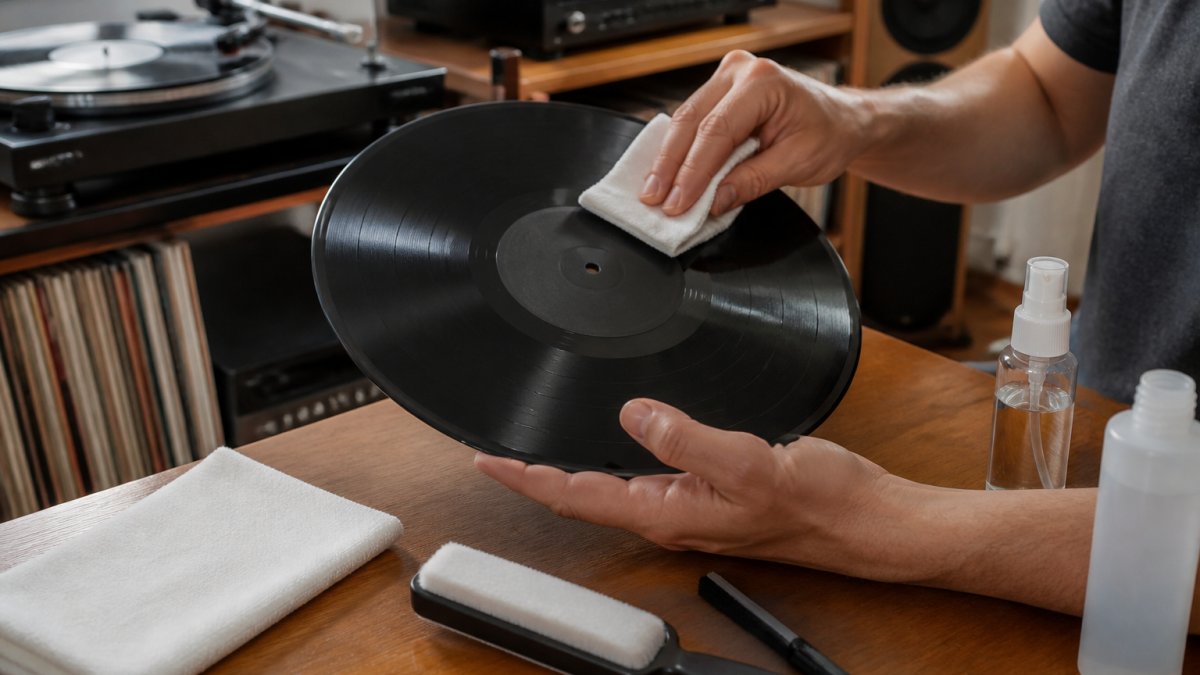
- Brush off loose dust with a carbon fibre brush, following the grooves in a circle
- Apply a small amount of cleaning fluid to a microfibre cloth, never directly to the disc
- Wipe gently in a circular motion, following the groove direction
- Work around the label, not across it
The whole job takes a few minutes per record. Go slow, use light pressure, and let the cloth do the work.
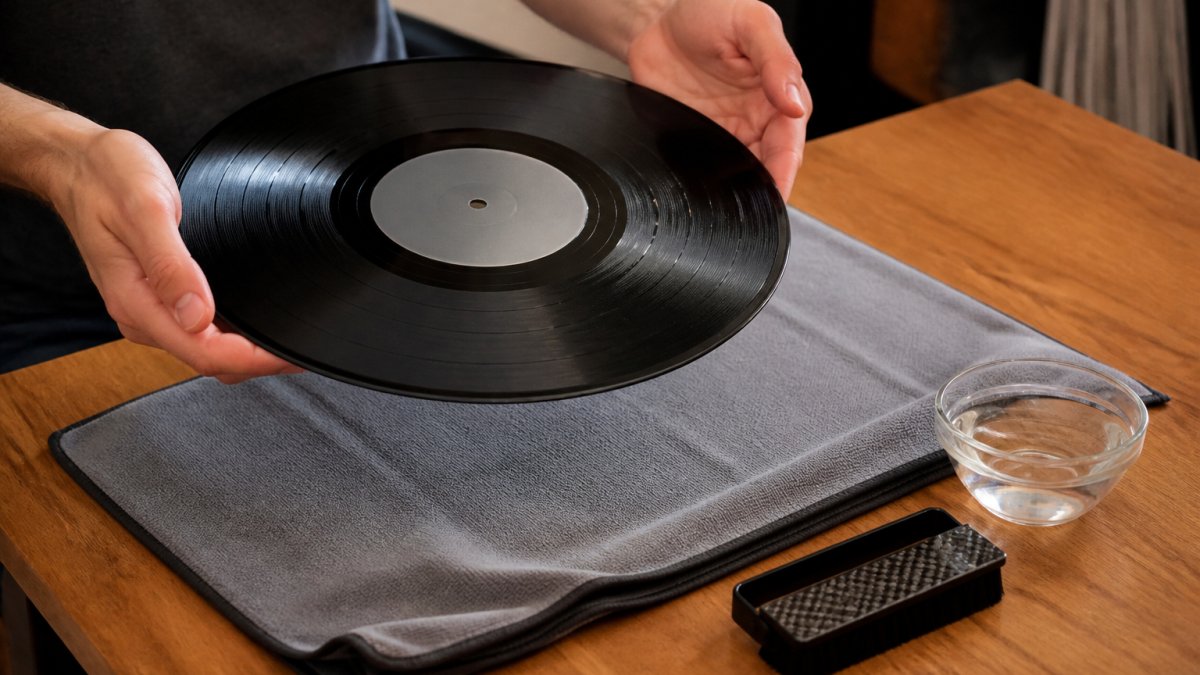
Watch out: pressing down hard while wiping is the fastest way to push grit deeper into the grooves. Light strokes lift dirt. Heavy ones grind it in.
Choosing the Right Vinyl Record Cleaning Solution
A vinyl record cleaning solution is a fluid made to lift dust, grease and fingerprints from the groove without leaving residue behind. Most are water-based and come ready to use or as a concentrate you mix yourself.
What should you look for? Keep it simple:
- Water-based formulas with no alcohol
- A solution sold specifically for vinyl, not a household cleaner
- A microfibre cloth or brush made for records
- A small applicator bottle so you control the amount
If you're weighing up brushes, our guide to anti-static brush vs carbon fibre brush for vinyl breaks down which type suits which job. In practice, a carbon fibre brush handles dry dust, while a wet clean deals with the sticky stuff.
Avoid anything labelled as a general-purpose cleaner. The wrong fluid can leave a film that dulls the sound and attracts more dust.
How to Dry Vinyl Records After Cleaning
How to dry vinyl records comes down to one thing: air and patience. Never rub the record dry with a cloth, because friction and trapped grit can scratch the surface.
Here's the safe routine:
- Shake off any loose fluid
- Stand the record upright on a clean drying rack or a folded towel
- Let it air dry for a few minutes
- Check for streaks before you play it
- Return it to its sleeve only once fully dry
A soft lint-free cloth can blot the surface lightly if you're in a hurry. Just don't scrub. Streaks usually mean you used too much fluid, so use less next time.
What You Should Never Use on a Vinyl Record
Household cleaners are the biggest enemy here. Many people reach for a kitchen spray or a glass cleaner, and that's a mistake.
Keep these well away from your records:
- Alcohol-based cleaners
- Paper towels, which shed fibres into the grooves
- Abrasive cloths or sponges
- Dish soap straight from the bottle
- Anything with added fragrance or polish
Alcohol can dry out and damage the vinyl surface over time. Paper towels leave tiny fibres that the stylus then drags through the groove. A common mistake is thinking "if it cleans glass, it cleans vinyl." It doesn't.
How Often to Clean Vinyl Records for a Healthy Stylus
How often to clean vinyl records depends on how much you play them. As a rule of thumb, brush off dust before every play and give records a wet clean every so often, or whenever you notice crackle and surface noise.
Here's a simple schedule to follow:
- Before every play: quick dry brush
- Every handful of plays: a wet clean
- New or second-hand records: a full clean before first use
- After a long gap in storage: clean before playing
A clean record protects your stylus, and a worn stylus damages records. If you want to know when to replace yours, read our guide on how often to replace a turntable stylus. It pairs neatly with a steady cleaning routine.
How often you clean depends on how much you play, so here is the simple schedule the article recommends.
| When | What to do |
|---|---|
| Before every play | Quick dry brush |
| Every handful of plays | A wet clean |
| New or second-hand records | A full clean before first use |
| After a long gap in storage | Clean before playing |
Common Cleaning Mistakes That Wear Out Records
The same handful of errors show up again and again. Here's what to avoid:
- Wiping in straight lines instead of following the grooves
- Using too much fluid and letting it pool near the label
- Cleaning with a dirty cloth that spreads grime around
- Skipping the dry brush before a wet clean
- Playing a record that's still damp
Each one adds up. Over time, grit left in the groove acts like sandpaper against the stylus and the record itself. Slow, gentle and regular beats a heavy scrub every few months.
Book a Record Cleaning Service or Build Your Cleaning Kit
Not everyone wants to clean records by hand, and that's fine. Our team at Chiltern Audio offers a record cleaning service, so you can hand over a stack of records and get them back ready to play.
If you're starting from scratch, our list of essential turntable setup tools for beginners covers the basics. And when you're ready to buy, our roundup of the best vinyl record cleaning kits points you to the right products.
Get started with Chiltern Audio and keep every record sounding its best.
Frequently Asked Questions
Can you use tap water to clean vinyl records?
Tap water is best avoided. It carries minerals and chlorine that leave a residue in the grooves, and that residue attracts dust and can dull the sound over time. Use distilled or deionised water instead, either on its own for a light rinse or mixed into a proper vinyl record cleaning solution. If you only have tap water to hand, keep it away from the record surface and save the cleaning for when you have the right supplies.
What should you never use to clean vinyl records?
Never use household glass cleaner, washing-up liquid, alcohol-based sanitisers, acetone or abrasive cloths. These strip the record's surface, leave films in the grooves and can soften the vinyl itself. Paper towels and kitchen roll shed fibres that catch on the stylus. Stick to a soft microfibre cloth, a carbon fibre brush and a solution made for records. If a product's label does not mention vinyl, leave it in the cupboard.
How often should you clean vinyl records?
Give every record a quick dry brush before each play to lift surface dust, and a wet clean when you first buy it, even if it looks new. After that, a full wet clean every ten to twenty plays is a sensible rhythm. Second-hand records usually need two or three wet cleans to shift years of grime. Store records in their sleeves and keep the turntable lid down when not in use to slow the build-up.
Can a dirty record damage a stylus?
Yes. Dust, grit and dried residue in the grooves act like sandpaper against the stylus tip, and a worn tip mistracks and distorts. Cleaning your records regularly and brushing the stylus before each side protects both the record and the cartridge. If you notice more surface noise or skipping, check the stylus for build-up before assuming the cartridge needs replacing, and have a dealer inspect it if the sound does not improve after cleaning.