 how-to
How Do You Properly Balance a Turntable Platter?
Table of Contents
- Platter Balancing Versus Tonearm Balancing: What Is the Difference?
- Preparing Your Turntable Before Adjustment
- How to Level a Turntable Using a Turntable Spirit Level
- Diagnosing Turntable Platter Wobble Versus an Uneven Record
- How to Balance a Turntable Tonearm Once the Platter Is Level
- Checking Platter Runout and Speed Stability, and When to Call a Specialist
- Frequently Asked Questions
How Do You Properly Balance a Turntable Platter?
Last Updated: November 7, 2026
Platter Balancing Versus Tonearm Balancing: What Is the Difference?
Most people searching for how to balance a turntable platter are actually trying to fix one of two things. Questions about how to balance a turntable platter often come from people setting up their first deck, and the confusion is understandable.
Platter balancing means making sure the platter sits flat and turns evenly on the spindle. Tonearm balancing means setting the tonearm so it floats level across the record, ready for the right tracking force. These are separate jobs. You level the platter first, then balance the tonearm.
Get the order wrong and the arm will never sit right, no matter how carefully you set the counterweight.
Preparing Your Turntable Before Adjustment
Before you touch any adjustment, prepare the deck properly. A few minutes here saves frustration later.
- Place the turntable on a solid, stable surface away from speakers
- Remove any record from the platter
- Lock the tonearm in its rest
- Check that the platter mat is seated flat
- Have a small bubble level, a coin for the feet and a soft cloth ready
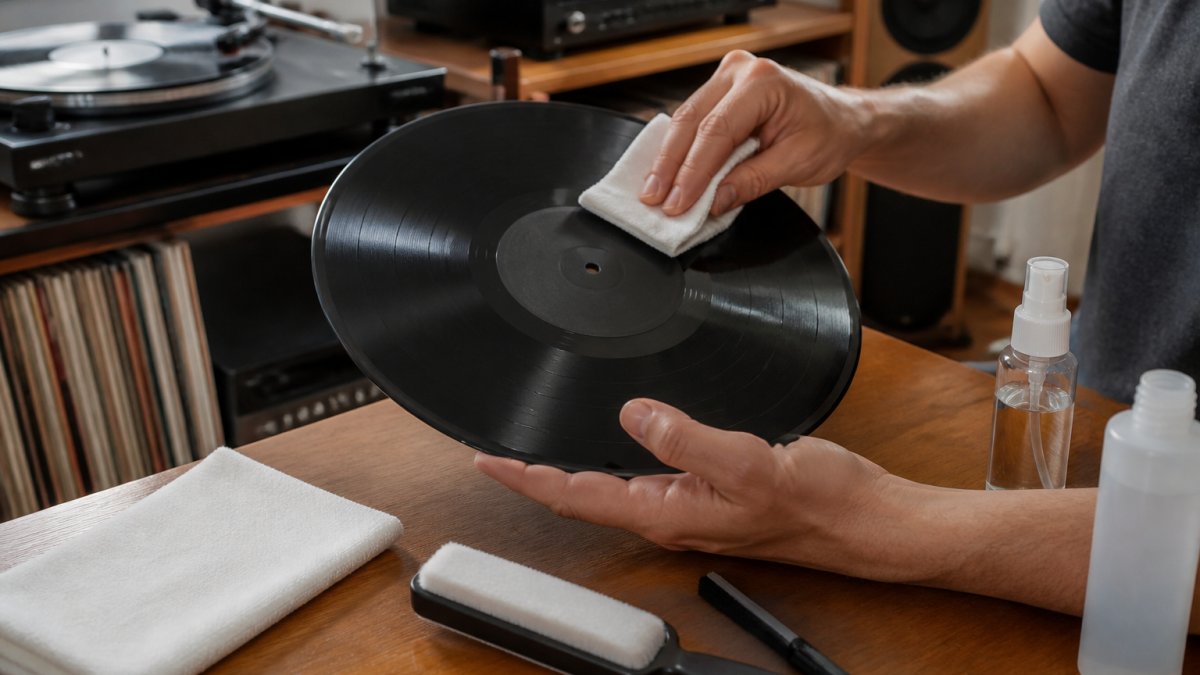
Keep the stylus protected at all times. A clean workspace also keeps dust off the records you plan to play. Our guide to 7 essential turntable setup tools for beginners lists what to gather before you start. If you plan to clean records as part of this process, Anti-Static Brush vs Carbon Fiber Brush for Vinyl explains which brush suits which job, and How to Clean Vinyl Records at Home Safely covers the method.
How to Level a Turntable Using a Turntable Spirit Level
A level platter is the foundation of good playback. Start here before anything else. A platter that is out of level can cause the tonearm to drift and the stylus to track unevenly, so this step matters.
Place a bubble level on the platter, then check it in two directions at right angles, front-to-back and left-to-right. If the bubble drifts, adjust the feet. Turn each foot a little at a time, rechecking after every turn. Work slowly. Small changes make a big difference. The bubble should sit centred in both directions.
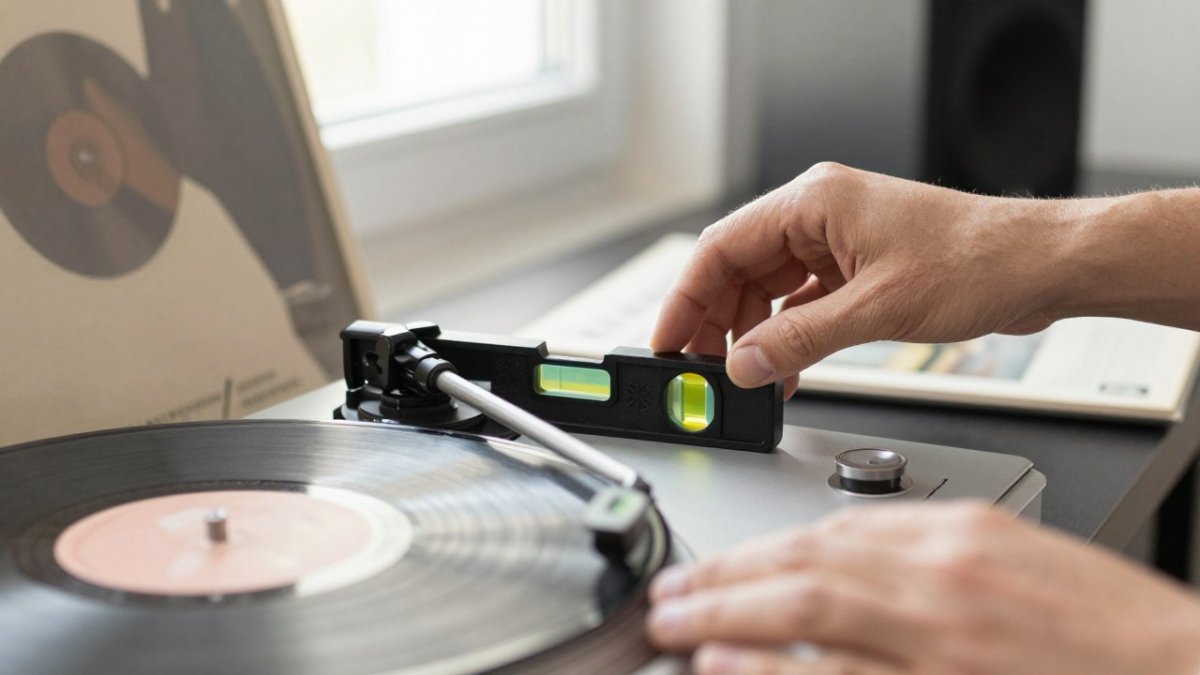
Where to measure matters. Place the level on the platter itself, not on the plinth or the platter mat, because the mat can compress unevenly and the plinth may not be parallel to the bearing. Check near the spindle and again near the rim. If the bubble reads differently at the two positions, the platter may be dished or the bearing may not be seated squarely, note that and investigate before adjusting the feet further.
If your turntable has no adjustable feet, or if the feet are already at their limit, you can shim the base. Use thin, rigid shims, a coin under a foot is a common field fix, but a purpose-made shim or a thin piece of card is more stable. Lift one corner at a time, insert the shim, and recheck with the level. Do not stack shims loosely; a wobbly base defeats the purpose.
Watch out: over-tightening a foot or forcing a shim can crack the plinth on some decks, so stop if you feel resistance.
Checking That the Platter Is Seated Correctly on the Spindle
A platter that is not seated properly can look level and still wobble. Lift the platter gently and set it back onto the spindle, making sure it drops fully into place. Spin it by hand and watch the rim for any side-to-side movement.
Check that nothing, such as a loose mat or debris, sits between the platter and the bearing. Reseat it if anything feels off. On belt-drive decks, check that the belt is seated correctly on the sub-platter and motor pulley before you replace the platter, a belt that is riding up or twisted will cause speed instability that no amount of leveling will fix. On direct-drive decks, never force the platter down; if it does not drop freely, stop and consult the manual, because the spindle and bearing tolerances are tight.
Once the platter is reseated, recheck the level in both directions. If the bubble has moved, the platter was not seated squarely the first time. Repeat the seating check until the platter drops cleanly and the level reads the same each time you replace it.
The article's steps for levelling the platter can be summarised as follows.
| Step | What to do | Note |
|---|---|---|
| Place level | Put bubble level on the platter itself | Not on the mat or plinth |
| Check two directions | Front-to-back and left-to-right | At right angles |
| Adjust feet | Turn each foot a little at a time | Recheck after every turn |
| Check positions | Measure near spindle and near rim | Readings should match |
| Shim base | Lift one corner at a time | Use thin, rigid shims |
| Reseat platter | Drop platter fully onto spindle | Recheck level after reseating |
Diagnosing Turntable Platter Wobble Versus an Uneven Record
Platter wobble and a warped record can look similar, so test before you adjust. A steady, repeating movement that follows the platter points to the deck; a movement that changes from one part of the record to another points to the record. But that is only the first branch of the diagnosis. Use the flow below to narrow it down.
Step 1, Swap the record. Play a different record. If the wobble follows the platter, the problem is the deck. If it stays with one record, the record is the cause. Set that record aside and check it on a flat surface; a visible dish or edge warp confirms it.
Step 2, Reseat the platter. Lift the platter gently and set it back onto the spindle, making sure it drops fully into place. Spin it by hand and watch the rim. If the wobble disappears, the platter was not seated correctly. If it remains, continue.
Step 3, Check the mat and any clamp. A loose or distorted platter mat, or a record clamp that is not sitting flat, can mimic platter wobble. Remove the mat and check the bare platter. If the wobble is gone, replace the mat.
Step 4, Look for a bent spindle or bearing play. With the platter removed, spin the spindle by hand and watch the tip. A spindle that visibly orbits is bent. With the platter back on, try to rock the platter gently side to side at the rim; any perceptible play suggests bearing wear. Both are service issues, not leveling issues.
Step 5, Check the platter itself. Place a straight edge across the platter and shine a light behind it. A visible gap that moves as you rotate the platter indicates a warped or dished platter. This is uncommon but does happen, particularly on older decks or after a knock.
Step 6, Rule out the drive. On belt-drive decks, a stretched or contaminated belt can cause speed flutter that looks like wobble. On direct-drive decks, a failing motor or control circuit can do the same. If the platter runs true but the pitch still wavers, the drive is the suspect.
Watch out: do not attempt to straighten a bent spindle or prise at the bearing yourself, these are precision parts and a specialist should assess them.
If the platter runs true and the level is correct but playback still sounds uneven, the cause may lie elsewhere, such as a worn stylus or a misaligned cartridge. How Often to Replace Turntable Stylus: A Practical Guide explains when the stylus itself may be the cause.
How to Balance a Turntable Tonearm Once the Platter Is Level
With the platter level, you can now balance the tonearm. This is the step most guides start with, but it only works on a level deck.
Unlock the arm and let it rest on its arm rest. Turn the counterweight until the arm floats horizontally with no downward or upward pull. Then set the tracking force on the dial to zero before fine-tuning.
Setting Anti-Skate and Tracking Force
Anti-skate counters the pull toward the centre of the record. Set it to match the tracking force you choose. Check your cartridge manufacturer's recommended tracking force, then apply it on the dial.
Our tip: set anti-skate and tracking force last, and recheck the arm balance after every change. A common mistake is setting anti-skate before the arm is balanced, which throws the whole setup off.
Checking Platter Runout and Speed Stability, and When to Call a Specialist
Once the deck is level and the arm is set, check how steady the platter runs. Place a record on the platter and listen for pitch wobble on a sustained note. If the pitch rises and falls regularly, the platter or belt may need attention.
If you have followed every step and the problem remains, or if you are unsure about removing the platter, stop and seek a qualified technician. How Often to Replace Turntable Stylus: A Practical Guide explains when the stylus itself may be the cause.
Chiltern Audio offers setup checks and a record cleaning service, and our team can explain every adjustment in plain English. Book your setup check or record cleaning service and let us help you get your deck playing its best.
Frequently Asked Questions
How do you balance a turntable platter?
Balancing a turntable platter starts with making sure the platter sits flat, centred and fully seated on the spindle, with the mat in place and no debris underneath. Next, level the whole turntable so the platter runs true, then check for wobble by watching the rim as it spins. Platter balance is about the platter itself, not the tonearm, so keep the two adjustments separate. If the platter still wobbles after levelling and reseating, the bearing or platter may need professional attention rather than further tweaking at home.
Does a turntable need to be perfectly level?
A turntable does not need to be perfectly level to the millimetre, but it should be close enough that the platter spins without leaning and the tonearm can float evenly. Even small tilts can cause the record to sit unevenly, which affects tracking and can contribute to uneven wear. Use a bubble spirit level on the platter and adjust the turntable's feet until the bubble is centred in both directions, then recheck after moving the unit.
What should I do if my turntable platter wobbles?
Start by switching off and removing any record, then check that the platter is seated correctly on the spindle and that the mat is flat. Level the turntable again, since an uneven base is a common cause of wobble. Next, spin the platter without a record and watch the rim against a fixed reference point. If the wobble remains, it may be a bent platter, a worn bearing or a loose component, and a qualified technician can assess whether repair is needed. Wobble with a record in place but not without one points more towards the record itself.
How do you balance a turntable tonearm?
Balancing the tonearm means making sure it floats horizontally when released, with the counterweight adjusted until the arm neither rises nor drops. Set anti-skate to zero before you begin, release and stabilise the arm, then turn the counterweight until it sits level. Once balanced, zero the tracking-force dial and then set your cartridge's recommended tracking force, which is usually listed in the manufacturer's documentation.