 listicle
Best Hi-Fi Speakers: 2026 Buyer's Guide & Top Picks
Table of Contents
- How We Choose the Best Hi-Fi Speakers
- Quick Comparison: Best Hi-Fi Speakers at a Glance
- Best Bookshelf Speakers for Small to Mid-Sized Rooms
- Best Floorstanding Speakers for Larger Spaces
- Active and Wireless Speakers for Modern Setups
- Speaker and Amplifier Matching: What You Need to Know
- How to Position Hi-Fi Speakers for the Best Sound
- Budgeting and Upgrade Planning for Your Hi-Fi System
- Frequently Asked Questions
Last Updated: October 18, 2026
How We Choose the Best Hi-Fi Speakers
The best hi-fi speakers suit your room, amplifier and the music you actually play, not the longest spec sheet. At Chiltern Audio, we believe that listening to equipment in person helps buyers make informed decisions.
Below, we explain exactly how we narrow the field, then give you our current picks across bookshelf, floorstanding and active designs.
Our Testing and Evaluation Process
We listen before we look at the price tag. Every pair in our demo room gets familiar recordings, a known amplifier, and time to hear what it does with voices, bass and busy passages.
Here is what we assess, in order:
- Balance across the frequency range. Treble, midrange and bass should feel like one performance, not three.
- Imaging and soundstage. Can you place instruments in the room, or does everything smear into one block?
- Build quality. Cabinet finish, driver protection, terminals and grilles all affect how long a speaker stays in your life.
A speaker can score brilliantly in isolation and still disappoint at home. Room size and placement change the result more than most specifications, which is why we cover both below.
Quick Comparison: Best Hi-Fi Speakers at a Glance
The table below summarises our current recommendations by type and use case. Prices vary by finish and retailer, so treat the "best for" column as the deciding factor rather than the badge.
| Speaker | Type | Typical price | Sensitivity | Nominal impedance | Best For | Standout Trait |
|---|---|---|---|---|---|---|
| Acoustic Energy AE300 Mk2 | Standmount | £500-£600 | Around 87dB | 8 ohms | Small to mid rooms | Balanced, unfussy standmount |
| Wharfedale Diamond 12.1i | Standmount | £250-£300 | Around 86dB | 8 ohms | First serious system | Easy to drive, easy to place |
| Bowers & Wilkins 607 S3 | Standmount | £500-£600 | Around 84dB | 8 ohms | Detail-led listening | Crisp treble, tidy cabinets |
| Cambridge L/R S | Floorstanding | £1,000-£1,200 | Around 87dB | 8 ohms | Larger rooms | Slim footprint, big presentation |
| Klipsch The Nines II | Floorstanding | £1,500-£1,800 | Around 98dB | 8 ohms | Vinyl and streaming | High sensitivity, lively sound |
| Sonos Play | Active wireless | £200-£250 | Not quoted | Not quoted | Whole-home listening | Simple streaming setup |
| Denon Home 400 | Active wireless | £350-£400 | Not quoted | Not quoted | Flexible rooms | Compact, room-friendly design |
Two things stand out.
Prices move with promotions and finishes, so confirm current pricing with the retailer. If you are building from scratch, remember stands, cables and amplification add to the total; the budgeting section below explains how to plan for that.
Best Bookshelf Speakers for Small to Mid-Sized Rooms
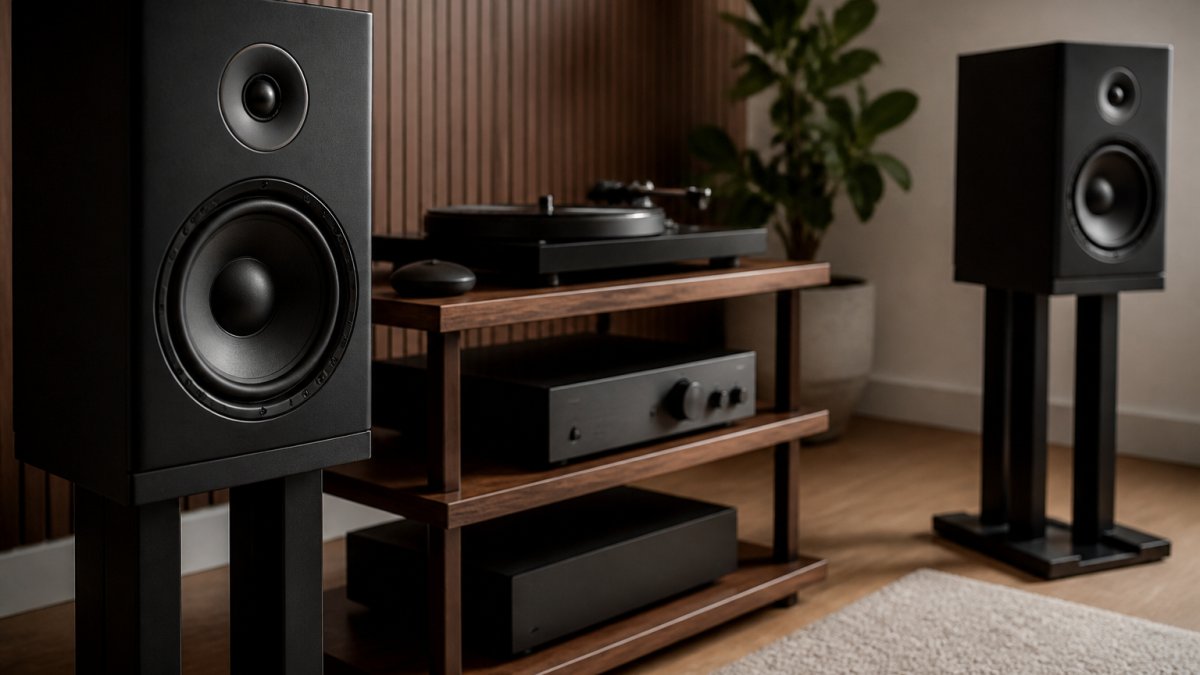
Bookshelf speakers, also called standmount speakers, are the sensible starting point for most first systems: little floor space, happy close to a rear wall, and cheaper than floorstanders of similar quality.
The trade-off is bass. A standmount will not move the air a large floorstanding cabinet can, so if your room is big or your music is bass-heavy, plan for a subwoofer later or step up to a floorstander.
Acoustic Energy AE300 Mk2
A standmount that gets out of the way of the music. The AE300 Mk2 appears in What Hi-Fi?'s guide to recommended hi-fi speakers, and it earns its place through balance rather than showmanship. Vocals sit naturally, the treble stays clean at higher volumes, and the cabinet feels properly built for the money.
Where it falls short: it will not flatter a poor recording, and it needs stands to sound its best. Budget for those from the start.
Wharfedale Diamond 12.1i
Our pick for a first proper system. TechRadar included the Diamond 12.1i in its roundup of the best hi-fi upgrades of 2026, and the appeal is straightforward: it is forgiving, easy to drive and happy in modest rooms.
If you are coming from a Bluetooth speaker, expect a genuine step up in clarity and imaging. Expect to rethink your furniture layout too, because these want a little space behind them.
Bowers & Wilkins 607 S3
Detail chasers, this one is for you. The 607 S3 features in AV.com's guide to budget hi-fi speakers and leans towards a crisp, articulate presentation. Busy recordings separate cleanly, and the cabinet finish looks smarter than the price suggests.
The honest caveat: a bright recording stays bright. Pair it with a warmer amplifier rather than another lean-sounding component.
Best Floorstanding Speakers for Larger Spaces
Floorstanding speakers give you more cabinet volume: deeper bass and greater dynamic range without a subwoofer. They also fill larger rooms more evenly, with drivers closer to ear height and a cabinet tuned for more low-end output.
Two practical warnings. First, floorstanders need breathing room; pushed into a corner, the bass turns muddy. Second, they place more demand on amplifier power handling, so check your amp before you commit.
Cambridge L/R S
A slim floorstander that punches well above its footprint. The Cambridge L/R S is named in TechRadar's 2026 hi-fi upgrades list, and the design suits living rooms where a wide cabinet would dominate. Soundstage is generous, and the bass extends low enough that most listeners will skip the subwoofer entirely.
Where it falls short: it rewards a decent amplifier. Feed it something underpowered and the low end loses grip.
Klipsch The Nines II
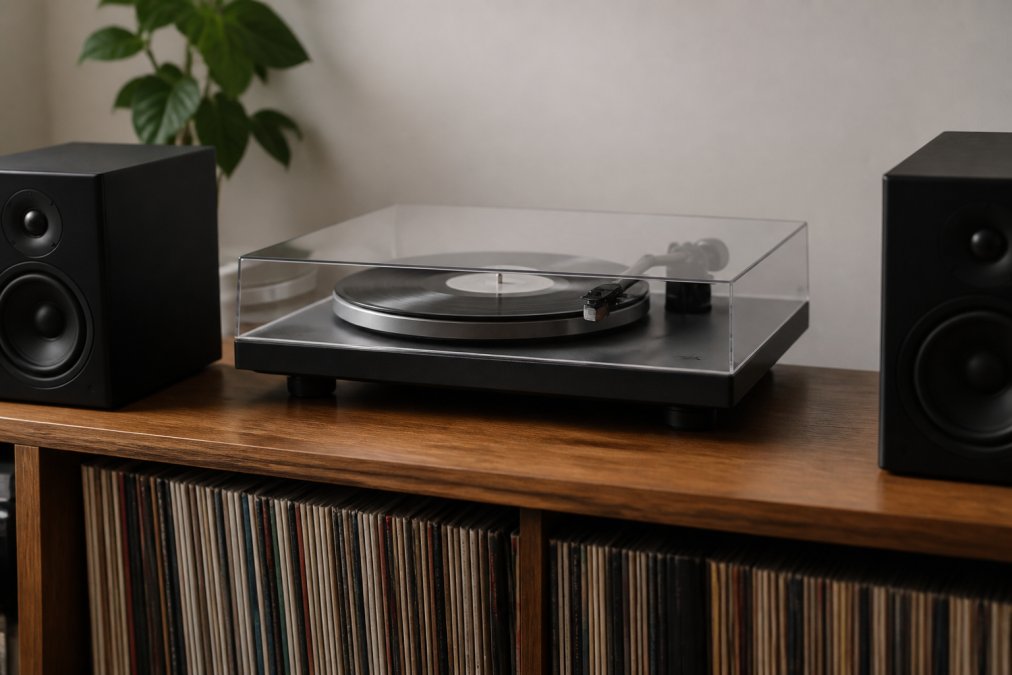
Built for people who want vinyl and streaming in one system. The Nines II appears in the same TechRadar hi-fi upgrades roundup, and its high sensitivity means it plays loud without demanding huge power. That makes it a natural match for a turntable setup in a mid-sized room.
Active and Wireless Speakers for Modern Setups
Active speakers have the amplifier built in: fewer boxes, fewer cables, less shelf space. Wireless models add Bluetooth or Wi-Fi streaming, suiting anyone playing from a phone or subscription service rather than a turntable. This streamlined approach to audio creates a clean aesthetic that pairs perfectly with the immersive visual experience provided by home cinema projectors.
The trade-off is upgrade flexibility. With an active speaker, the amplifier is fixed; with a passive setup, you can change one component at a time.
Sonos Play
The simplest route into good sound at home. The Sonos Play appears in TechRadar's 2026 hi-fi upgrades roundup, and its strength is convenience: one speaker, one app, music playing in minutes. Multi-room support means you can add a second unit later without rebuilding the system.
It will not match a dedicated standmount and amplifier for outright sound quality. For a kitchen, study or bedroom, that trade is usually worth making.
Denon Home 400
A compact wireless speaker that fits where a pair of standmounts will not. The Denon Home 400 also features in the TechRadar hi-fi upgrades list, and its room-friendly design makes it easy to live with. Streaming is straightforward, and the sound is fuller than the size suggests.
Speaker and Amplifier Matching: What You Need to Know
Speaker and amplifier matching means checking that your amplifier can drive your speakers cleanly at the volumes you actually use.
Three specifications decide most of it:
- Sensitivity (measured in decibels, usually dB/W/m) tells you how loud a speaker goes for a given amount of amplifier power. A figure of 87dB means the speaker produces 87dB of sound pressure at one metre when fed one watt. Every 3dB increase halves the power needed for the same volume, so a 90dB speaker needs half the power of an 87dB speaker to play at the same level.
- Impedance (measured in ohms) tells you how hard the speaker is for an amplifier to push. A nominal 8-ohm figure is common, but the minimum impedance matters more: a speaker that dips to 4 ohms or below will demand more current, and some budget amplifiers are not comfortable with that. Check the manual for a minimum impedance figure, not just the nominal one.
- Power handling tells you the maximum the speaker will take before it complains. It is usually quoted as a range, for example 25-100W, and it is a guide rather than a target. An amplifier rated below the lower figure may run out of clean power before the speaker reaches its potential; one rated above the upper figure is fine as long as you listen sensibly.
A common mistake is pairing a hugely powerful amplifier with efficient speakers: it works, but the money is better spent elsewhere.
As a rule of thumb, a standmount with mid-80s sensitivity and a nominal 8-ohm load suits an amplifier rated around 40-60W per channel in typical rooms.
If unsure, take your speaker specifications to a dealer and ask for a demonstration with an amplifier in your budget. Listening at the volumes you actually use will tell you more than any single number on a spec sheet.
How to Position Hi-Fi Speakers for the Best Sound
Speaker placement is free and changes the sound more than most upgrades. A few centimetres can shift bass response and imaging noticeably, so experiment before buying new kit.
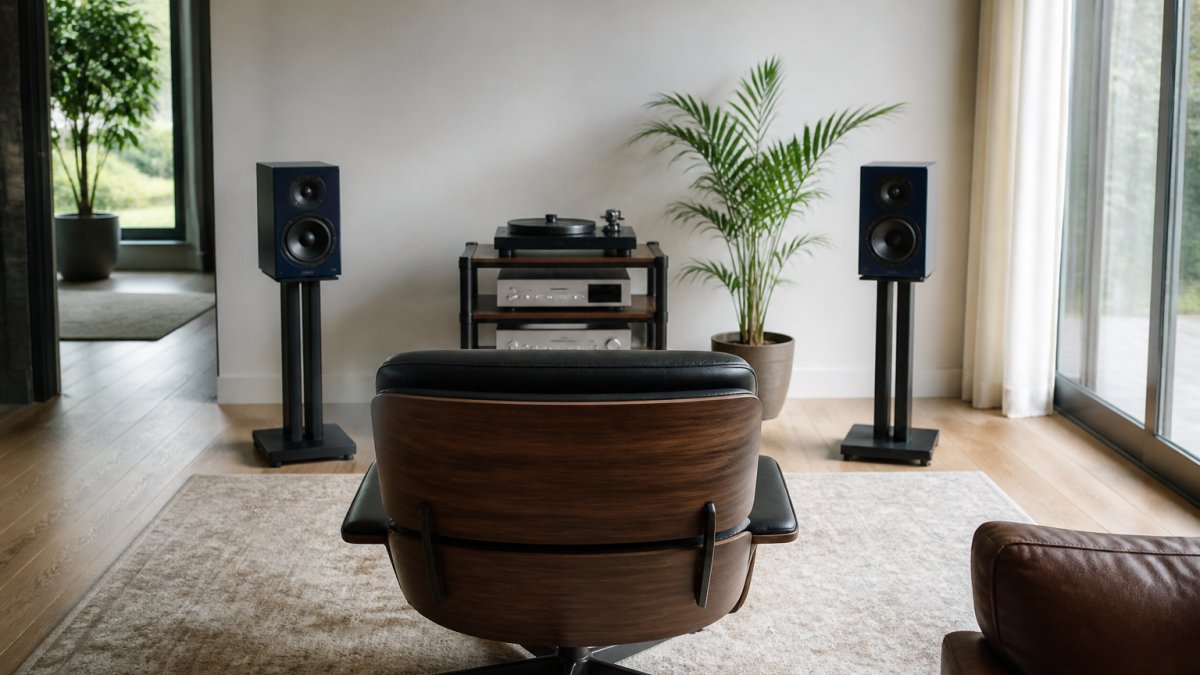
Start with these steps:
- Place the speakers on the long wall if you can, spaced roughly as far apart as you sit from them.
- Keep them at least 30cm from the rear wall, more if the bass sounds boomy.
- Angle them inward so they point just past your ears at the listening position.
- Get the tweeters close to ear height, using stands or isolation pads.
- Move your chair out of the dead centre if the bass feels uneven.
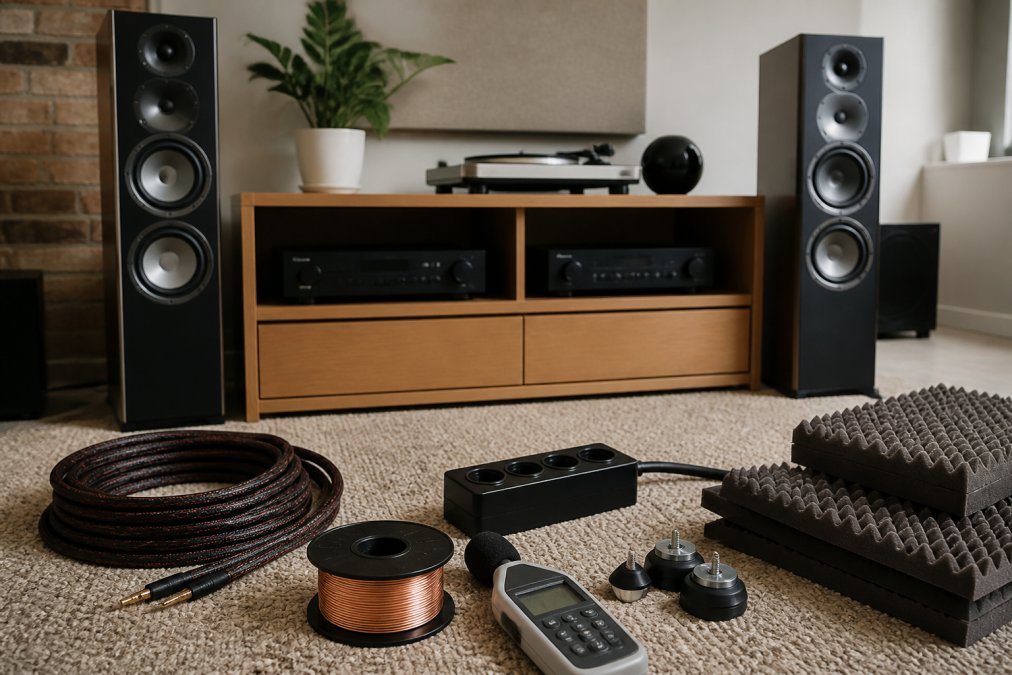
Hard floors, bare walls and large windows make a room bright and echoey. Rugs, curtains, bookshelves and soft furnishings absorb that energy, and the improvement is often more obvious than a component upgrade.
Budgeting and Upgrade Planning for Your Hi-Fi System
Budget for total system cost, not one box.
We suggest splitting your budget roughly like this:
- Speakers: the largest share, since they colour the sound most.
- Amplifier: enough to drive your chosen speakers cleanly.
- Source: turntable, streamer or DAC, depending on how you listen.
Upgrade in this order: speakers first, then amplifier, then source. If your room is the weak link, acoustic treatment and better placement come before any new component.
At Chiltern Audio, we run real-world demonstrations and bespoke system building, so you can hear a matched setup in a room rather than guessing from specifications.
Frequently Asked Questions
What are the best hi-fi speakers for a large room?
For larger rooms, floorstanding speakers like the Cambridge L/R S or Klipsch The Nines II are often the better fit because they move more air and can fill a bigger space without straining. That said, a well-designed standmount such as the Acoustic Energy AE300 Mk2 can work well in a large room if you add a subwoofer and position them carefully. The room's acoustics and your amplifier's power output matter as much as the speaker's size, so audition before committing.
Are bookshelf or floorstanding speakers better for hi-fi?
Neither is universally better; it depends on your room and listening habits. Bookshelf speakers take up less space and often image more precisely, making them ideal for small to mid-sized rooms. Floorstanding speakers generally offer deeper bass and higher power handling for larger spaces. If you value a compact footprint and don't need room-shaking low end, the best bookshelf speakers are the sensible choice; for scale and dynamics, go floorstanding.
Do hi-fi speakers need an amplifier?
Passive hi-fi speakers do require an amplifier or receiver to drive them. Active speakers, such as the Sonos Play or Denon Home 400, have built-in amplification, so you only need a source. When matching a passive speaker to an amplifier, check the speaker's nominal impedance and sensitivity, and make sure the amp's power rating sits comfortably within the speaker's recommended range. Getting this balance right protects your equipment and gets the best sound.
How much should I spend on hi-fi speakers?
There's no fixed rule, but it helps to think in terms of system balance. Spending a disproportionate amount on speakers while skimping on the amplifier or source often yields disappointing results. A sensible approach is to allocate a similar proportion to speakers and electronics, then upgrade the weakest link first. Entry-level models can offer strong value, while premium options often reward better partnering kit. Always audition within your budget.
How do I choose speakers for my room?
Start with room size and layout. Small rooms suit bookshelf or standmount speakers placed on stands, while larger rooms benefit from floorstanding models. Consider how far you can sit from the speakers and whether you can leave space behind them. Also think about the amplifier you own or plan to buy, and match impedance and power. A home demonstration, like those offered by Chiltern Audio, lets you hear how a speaker behaves in a real room before you buy.
The hardest part of buying hi-fi speakers is not choosing a model, it is knowing whether it will work in your room with your amplifier. That is the gap a demonstration closes. Chiltern Audio offers bespoke system building, expert matching of audio components for a balanced system, and real-world demonstrations, so you can hear the result before you buy. Get started with Chiltern Audio and build a system that sounds right the first time.